Atlanta Civil Rights Tour
Tours & tickets

Hand-picked by our editors — only the best 5 Atlanta Civil Rights Walking Tour tours from 140 reviewed.

Open today 09:00–17:00
Attendance: Light — weekday morning
Check the visitor center for daily ranger program schedules.
Free cancellation Instant confirmation Mobile voucher Verified partner Book now, pay later
Tickets

Choose your ticket

Verified partners for every tour, free cancellation where available, and instant confirmation on every booking.

Atlanta Black History & Civil Rights Bus Tour 4 hr
Standard Entry

Atlanta Black History & Civil Rights Bus Tour

★ 4.9 (210)
€60
per person
Instant Mobile voucher Flexible — change up to 24h

Journey through the heart of the Civil Rights Movement on this immersive 4-hour guided exploration

Reserve
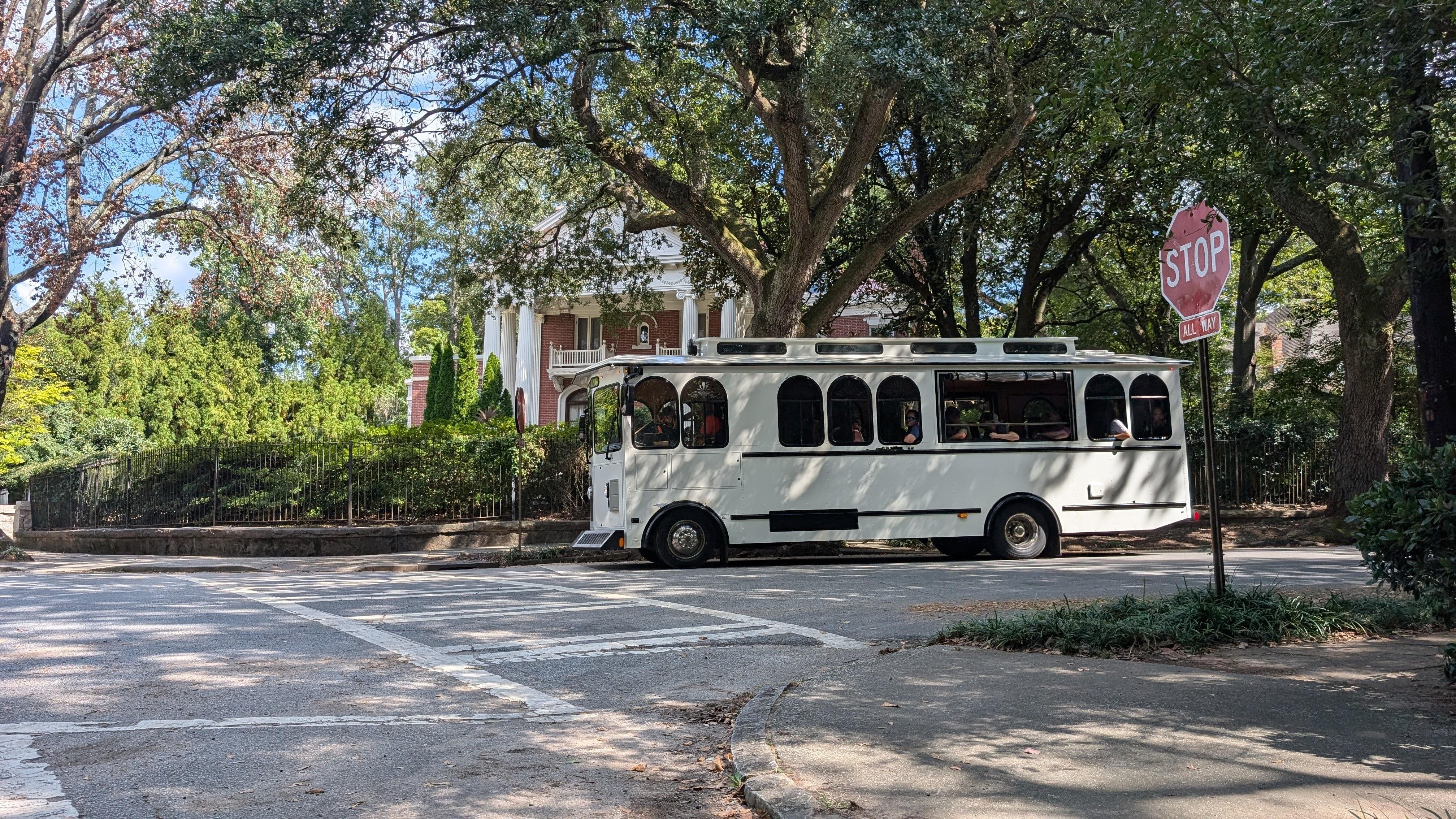
Downtown Atlanta Trolley Discovery Tour 1 hr 30 min
Standard Entry

Downtown Atlanta Trolley Discovery Tour

★ 4.7 (818)
€31
per person
Instant Mobile voucher Flexible — change up to 24h

Ride through the capital of the South and uncover its most celebrated landmarks and leafy districts

Reserve

Prices from verified partners. Availability updates in real time at checkout. Free cancellation policies apply where shown.

What you'll do

Inside a tour, step by step

  1. 01 30 min

    Visitor Center Start

    Begin at 450 Auburn Ave NE for orientation

  2. 02 60 min

    Birth Home Tour

    Explore the childhood home of Dr. King

  3. 03 45 min

    Ebenezer Baptist Church

    Visit the site of historic sermons

  4. 04 30 min

    King Center Memorial

    Pay respects at the crypt and reflection pool

Highlights

What you'll see inside the attraction

The landmarks, rooms, and views travelers on this tour remember — all visible on a single visit.

Birth Home

This historic house serves as the starting point for understanding Dr. King's early life. Tours are ranger-led and availability is limited to small groups.

Ebenezer Baptist Church

This landmark hosted the foundational sermons of Dr. King. Visitors can observe the sanctuary where he served as co-pastor.

The King Center

This site houses the crypts of Dr. and Mrs. King. The reflection pool provides a space for quiet contemplation.

Fire Station No. 6

This building represents the segregation era of the surrounding community. It now serves as an interpretive center for neighborhood history.

Prince Hall Masonic Lodge

This structure served as the headquarters for the Southern Christian Leadership Conference. It played a vital role in organizing local civil rights movements.

Head to head

Atlanta Civil Rights Walking Tour vs. Bus Tour — How to Choose Your Experience

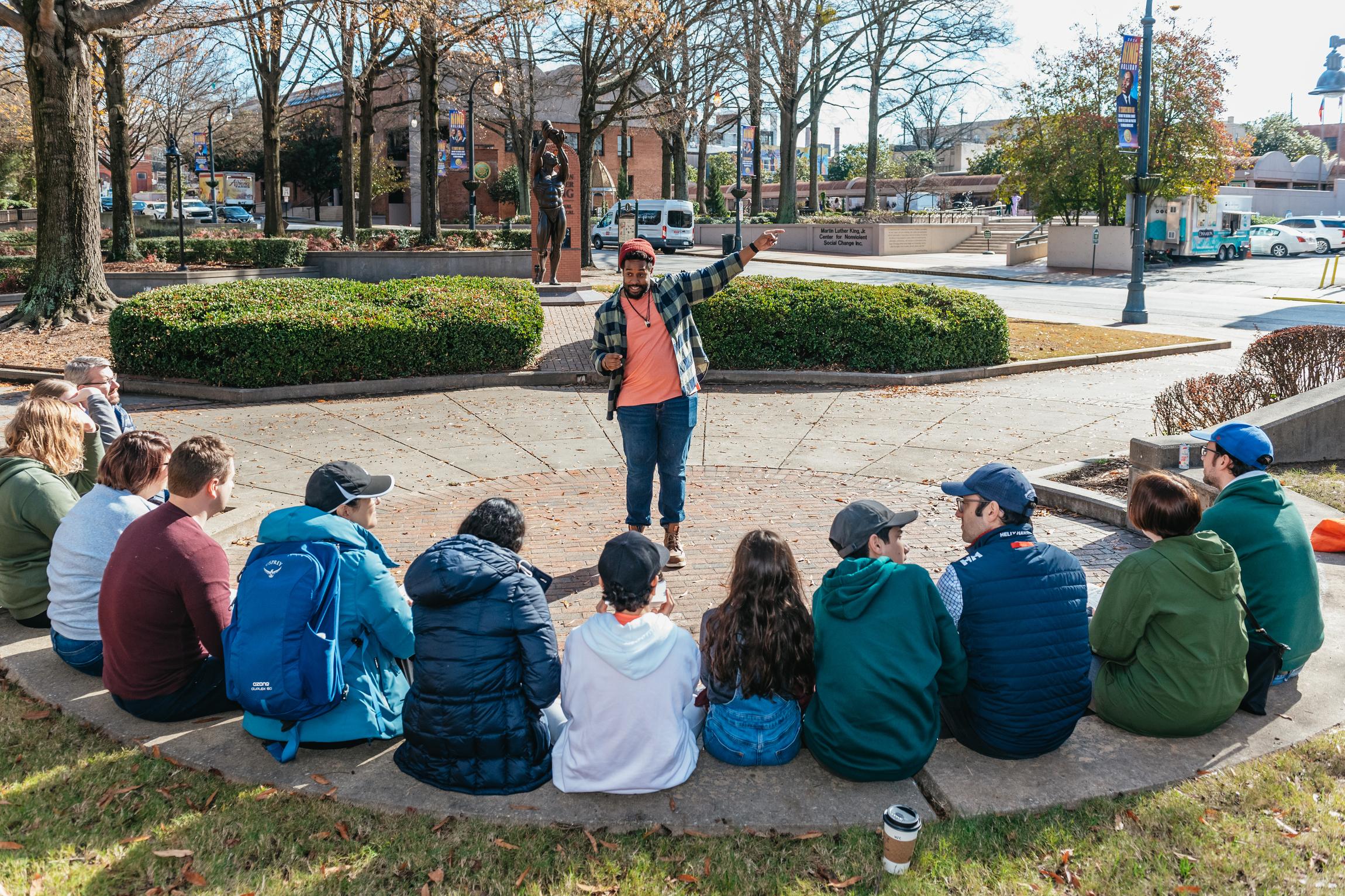
The walking experience offers an intimate connection to the Martin Luther King, Jr. National Historical Park, while the bus tour provides a comprehensive narrative of landmarks across the broader city. Visitors who prefer deep, localized reflection often find the atlanta civil rights walking tour to be the more immersive option.

Feature Top pick Walking Tour Bus Tour
Scope of locations
City-wide major sites
Pace and physical activity
Low-exertion vehicle transit
Narrative depth
Broad chronological overview
Convenience
Centralized transport included
Group size
Larger passenger capacity
Historical context
Evolution of the movement

Verdict: Choose the walking path for detailed engagement with the historic district, or opt for the bus tour if you seek atlanta civil rights walking tour tickets that cover multiple city-wide monuments efficiently.

How your ticket works

Book your ticket in 3 steps

  1. 01

    Book online

    Choose your ticket, select your date, and reserve in under two minutes. Secure checkout handled by our verified partner.

  2. 02

    Receive your mobile voucher

    Instant confirmation by email, with a mobile voucher you can save offline. No printing, no queuing at a collection desk.

  3. 03

    Show & enter

    Arrive at the entrance, show your voucher on your phone, and walk in. Most tickets include priority or skip-the-line access.

Plan your visit

Everything you need to know before you go

Practical details for your visit straight from our verified partners — hours, access, rules, and how to get there.

Open today · 09:00–17:00
Opening Hours
09:00–17:00
Address
450 Auburn Ave NE, Atlanta, GA 30312
Site Access
Visitor center and grounds are accessible
Best Arrival
09:00–11:00
Storage
No lockers available on-site
Navigation
Follow signage within the National Historical Park
Mon
09:00–17:00
Tue
09:00–17:00
Wed
09:00–17:00
Thu
09:00–17:00
Fri
09:00–17:00
Sat
09:00–17:00
Sun
09:00–17:00
Closed on: Jan 1 (New Year's Day), Nov 26 (Thanksgiving Day), Dec 25 (Christmas Day)
Main entrance

Visitor Center

450 Auburn Ave NE, Atlanta, GA 30312

Main info desk for the atlanta civil rights walking tour

Address
450 Auburn Ave NE, Atlanta, GA 30312
Storage
No lockers available on-site
Navigation
Follow signage within the National Historical Park

How to get there

🚆
Public transport · 20 min · $1.00 per ride

Take the Atlanta Streetcar to the King Historic District stop. It provides direct access to the main park entrance area

🚗
Car · N/A · Free

Park at the official visitor center parking lot at 450 Auburn Ave NE. Spaces can fill up quickly by mid-day

Dress code

Casual and comfortable clothing is recommended for this atlanta civil rights walking tour. Wear sturdy walking shoes as the terrain includes historic sidewalks and park pathways.

Bags & security

Standard backpacks are permitted, but please be prepared for security screenings at specific federal buildings. Large luggage should be stored off-site as there are no public storage facilities at the visitor center.

Photography

Photography is encouraged in outdoor public spaces of the atlanta civil rights walking tour. Please respect signage regarding flash photography inside historic interiors.

Accessibility

The park provides accessible ramps and paved pathways throughout the primary landmarks. Visitors with mobility concerns can request assistance at the information desk.

Mobile phones

Mobile phones are permitted for capturing photos and using interpretive mobile apps. Please keep devices on silent while inside the Ebenezer Baptist Church.

What to bring

  • Comfortable walking shoes
  • Water bottle
  • Sunscreen
  • Hat
  • Smartphone
  • Valid ID

Not allowed

  • Weapons
  • Large suitcases
  • Professional filming equipment
  • Alcohol
  • Illegal substances
  • Drones
  • Bicycles
  • Glass containers

Families & strollers

This atlanta civil rights walking tour is suitable for families and educational school groups. Junior Ranger programs are available to engage younger visitors with the history of the area.

Food & drink

Food and drink are not permitted inside the historic structures or museum areas. Please enjoy snacks and water in the outdoor designated park spaces.

Pets

Service animals are welcome throughout the park grounds. Pets are not permitted inside the historic buildings or the visitor center.

Good to know

As this is an active historical site, guests are asked to maintain a respectful volume while near memorials. The visitor center provides maps that help structure your self-guided path.

Meeting point

Where to find us

Visitor Center

450 Auburn Ave NE, Atlanta, GA 30312

Main info desk for the atlanta civil rights walking tour

Get directions
Around your visit

Everything else worth knowing

Best time to go, insider tips, nearby landmarks, and the cancellation fine print — flip through to skim what matters to you.

Best time to visit

How crowds, weather, and events shift across the year.

Spring

March through May offers mild temperatures perfect for an atlanta civil rights walking tour. Crowds are manageable during weekday mornings before the summer rush.

Summer

June through August is warm, so aim for an early morning start between 09:00–11:00. This avoids the peak afternoon heat while you explore the historic district.

Fall

September to November features crisp air and clear skies ideal for walking tours. This season remains popular for school trips visiting local Atlanta landmarks.

Winter

December through February is the quietest period. Dress in layers as outdoor walking involves exposure to fluctuating temperatures.

Helpful tips for your visit

Small details that turn a good visit into a great one.

Arrive Early

The best arrival window is 09:00–11:00 to secure limited spots for ranger-led birth home tours. These tickets are often claimed shortly after opening.

Stay Hydrated

Atlanta heat can be intense in the summer. Bring a refillable water bottle to use at stations around the historical park.

Check Events

Review the official site calendar for special commemorative programs. These can occasionally impact access to certain landmarks during an atlanta civil rights walking tour.

Use the Map

Pick up a printed park guide at the visitor center. It helps coordinate your visit to the birth home and church effectively.

Nearby landmarks

Non-bookable sights within a short walk — free to visit, easy to pair.

The King Center

2 min walk

Features the final resting place of Dr. Martin Luther King Jr. and Coretta Scott King.

Ebenezer Baptist Church

3 min walk

The historic church where Dr. King served as co-pastor.

Sweet Auburn Curb Market

10 min walk

A historic local market offering diverse food vendors and community history.

Georgia State Capitol

12 min walk

The seat of Georgia government known for its gold-leafed dome.

Cancellation policy

Flexible, no hidden fees.

The atlanta civil rights walking tour operates within the Martin Luther King, Jr. National Historical Park, where entry is 0 USD. Please check individual tour operator terms for their specific cancellation windows.

Where to stay

Hotels & districts near the attraction

Hand-picked options within walking distance — pick a district for vibe, or a specific hotel for convenience.

Downtown Hotels

10 min drive
mid-range

Centrally located with easy transit access to the district.

Old Fourth Ward

5 min drive
boutique

Trendy area near the park with local flavor.

Midtown District

15 min drive
luxury

Offers upscale lodging with quick highway connections.

About

The place, in context

Booker T. Washington called Auburn Avenue "the richest Negro street in the world," and by 1920 the description was arithmetic rather than flattery. The half-mile corridor carried its own bank, its own insurance company, its own daily newspaper, and more than a hundred Black-owned businesses. Segregation built it. Excluded from downtown credit and downtown storefronts, Atlanta's Black professional class assembled a parallel commercial district east of the railroad gulch. An Atlanta Civil Rights Walking Tour follows that half-mile almost exactly. The district survived its own success poorly. Construction of the Downtown Connector in the 1950s severed Auburn Avenue from downtown Atlanta, and the desegregation that Auburn's own residents fought for drew Black commerce elsewhere. A Sweet Auburn heritage walk today crosses that scar without noticing it. Storefronts emptied. Congress intervened in 1980, twelve years after King's assassination, designating a National Historic Site that federal law elevated to a National Historical Park in 2018. The National Park Service now holds the shotgun row houses, Fire Station No. 6, and a visitor center at 450 Auburn Ave NE where entry to the park and visitor center is free and the doors open at 09:00 every day of the week. Architecture carries the argument. The birth home at 501 Auburn Avenue is a two-story Queen Anne of 1895, gabled and porch-wrapped, built for a white family and later bought by King's maternal grandfather. Ebenezer Baptist Church rose across the street, completed in 1922, brick Gothic Revival with a balcony that filled on the Sundays King preached from 1960 until his death. Its Heritage Sanctuary has been restored to the palette of that decade. Two hundred metres east, the King Center sets a marble crypt in a reflecting pool and keeps an eternal flame burning beside it. A single Atlanta Civil Rights Walking Tour tour rarely exceeds a mile, and yet it holds a birth, a pulpit, and a grave within sight of one another. That density explains the crowds. Atlanta Civil Rights Walking Tour tours converge on three blocks because the movement's domestic life and its public one occupied the same address book — the Ebenezer pews, the Prince Hall Masonic building that housed the SCLC, and the WERD studio above it, the first Black-owned radio station in the country. None of it was built as a monument. It was built as a neighborhood, and it is read best as one.

"A single mile of Auburn Avenue holds a birth, a pulpit, and a grave within sight of one another."
Your experience

What a tour day looks like

A step-by-step walkthrough of the visit — what you'll see, how long each stage takes, and the details that matter.

You reach 450 Auburn Ave NE before 10:00, inside the 09:00–11:00 window that decides whether you see the birth home from the inside. Ranger-led tours are capped and released at the visitor center desk from 09:00; you put your name on the list, take the assigned time, then walk the block while you wait. Ten minutes carries you past Fire Station No. 6 to Ebenezer Baptist Church. You sit in the Heritage Sanctuary while a recording of the pulpit runs. You cross to the reflecting pool, where the crypt sits on its island and the flame does not go out. Then back east for your slot: a small group at a time, no photography indoors, the upstairs bedroom where King was born in 1929, the piano his mother taught on. By early afternoon you have walked the park's core, and the gates hold until 17:00. Atlanta Civil Rights Walking Tour tickets on this page carry you past what three blocks allow — the MLK Jr. Historical Park Walking Experience puts a guide beside you on the same pavement, the Atlanta Black History & Civil Rights Bus Tour widens the map toward the Atlanta University Center, the Downtown Atlanta Trolley Discovery Tour loops the broader run of Atlanta civil rights landmarks, and the National Center for Civil & Human Rights Entry Ticket ends the day at the lunch-counter simulator. The 5-Hour Comprehensive City Tour is the version that refuses to choose.

Frequently asked

Frequently asked questions about atlanta civil rights walking tour tours

What are the opening hours for an atlanta civil rights walking tour?

The visitor center is open from 09:00–17:00 daily.

Are atlanta civil rights walking tour tickets required?

Entry to the park and visitor center is 0 USD, meaning no atlanta civil rights walking tour tickets are required for general access.

Is there a recommended arrival time for an atlanta civil rights walking tour?

We recommend an arrival window of 09:00–11:00 to secure limited spots for ranger-led birth home tours.

How do I book an atlanta civil rights walking tour tour?

You can learn more about scheduling at the official site, https://www.nps.gov/malu/index.htm.

Is the park accessible for an atlanta civil rights walking tour?

Yes, the Martin Luther King, Jr. National Historical Park is accessible for all visitors.

Are bags permitted on an atlanta civil rights walking tour?

Standard bags are permitted, but please be aware there is no luggage storage at 450 Auburn Ave NE.

Can I bring food during my atlanta civil rights walking tour?

Food is not allowed in historic structures, but you may eat in designated outdoor areas during your atlanta civil rights walking tour.

What is the address for the atlanta civil rights walking tour?

The site is located at 450 Auburn Ave NE, Atlanta, GA 30312.

Are there prohibited items on an atlanta civil rights walking tour?

Prohibited items include weapons, large suitcases, and professional filming gear.