
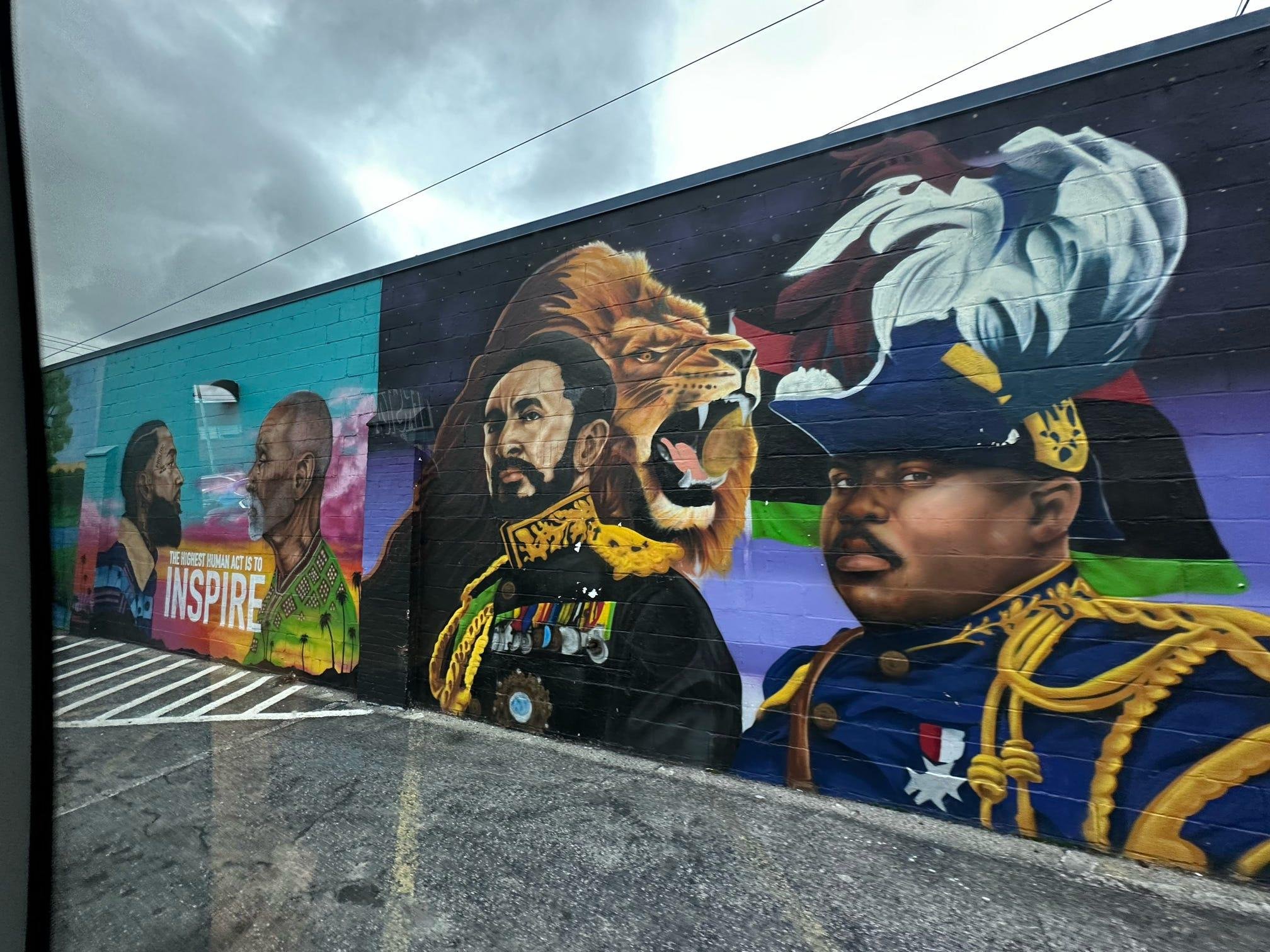
4 hr
Atlanta Black History & Civil Rights Bus Tour
Journey through the heart of the Civil Rights Movement on a guided tour of Atlanta's most significant African-American heritage sites
Reserve

Hand-picked by our editors — only the best 5 experiences from 140 reviewed.
Verified partners for every tour, free cancellation where available, and instant confirmation on every booking.
4 hr
Journey through the heart of the Civil Rights Movement on a guided tour of Atlanta's most significant African-American heritage sites
Reserve
5 hr
Comprehensive Atlanta sightseeing experience covering downtown landmarks, Civil War history, and upscale neighborhoods
Reserve
1 hr 30 min
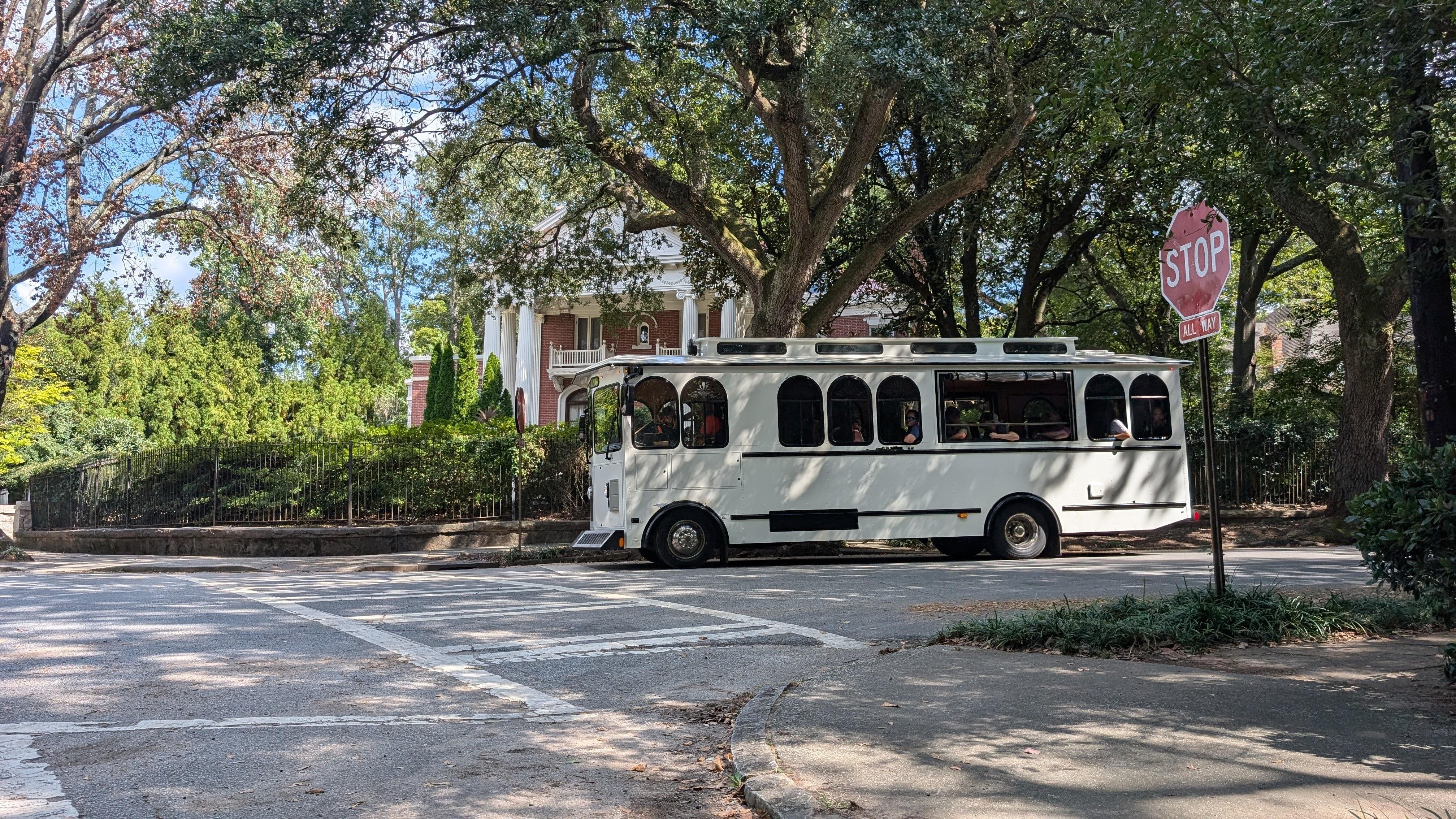
Discover the heart of Georgia's capital on a narrated trolley ride through iconic districts
ReservePrices from verified partners. Availability updates in real time at checkout. Free cancellation policies apply where shown.
The landmarks, rooms, and views travelers on this tour remember — all visible on a single visit.
This historic sanctuary served as the spiritual home for Dr. Martin Luther King Jr. and his family for generations. It remains a key landmark for visitors.
They complement each other; most visitors who do both call the center the more academic experience, while the atlanta civil rights bus tour provides a superior narrative journey through local landmarks.
| Feature | Top pick Civil Rights Bus Tour | National Center |
|---|---|---|
Experience Type |
Guided mobile narrative | Self-paced museum exhibit |
Engagement Style |
Interactive storytelling | Multimedia installations |
Duration |
Variable by route | 2–3 hours |
Flexibility |
Fixed departure times | Open-ended access |
Learning Focus |
Historical site context | Broader global activism |
Staff Interaction |
Live expert guide | Docent availability |
| See tickets → |
Verdict: Choose the atlanta civil rights bus tour tours for a guided look at city history, or visit the center for an immersive walk through detailed civil rights bus tour tickets archives.
Choose your ticket, select your date, and reserve in under two minutes. Secure checkout handled by our verified partner.
Instant confirmation by email, with a mobile voucher you can save offline. No printing, no queuing at a collection desk.
Arrive at the entrance, show your voucher on your phone, and walk in. Most tickets include priority or skip-the-line access.
Practical details for your visit straight from our verified partners — hours, access, rules, and how to get there.
100 Centennial Olympic Park Dr NW
Check in at the main entrance
Use MARTA to the GWCC/CNN Center station.
Park at public garages near Centennial Olympic Park.
Casual clothing and comfortable walking shoes are recommended for the Atlanta civil rights bus tour. Be prepared for high summer temperatures.
Small personal bags are permitted on the bus. Large luggage or oversized backpacks are not allowed due to limited space on the Atlanta civil rights bus tour.
Photography is encouraged during stops. Please respect the privacy of others and follow guide instructions during the Atlanta civil rights bus tour.
Please contact the operator prior to booking if you require specific accessibility accommodations for the Atlanta civil rights bus tour. The bus may have limitations for motorized wheelchairs.
Mobile phones are permitted for use during the tour. Please set devices to silent mode while the guide is speaking.
The Atlanta civil rights bus tour is suitable for families with older children interested in history. Please note the duration may be challenging for very young children.
Water is recommended, especially in summer. Food is not served on the bus, but there are opportunities to grab refreshments near the start point.
Only registered service animals are allowed on the bus. Pets are otherwise prohibited.
The Atlanta civil rights bus tour provides a narrative overview of key sites. Ensure you arrive at the designated meeting point by 10:00.
100 Centennial Olympic Park Dr NW
Check in at the main entrance
Get directionsBest time to go, insider tips, nearby landmarks, and the cancellation fine print — flip through to skim what matters to you.
How crowds, weather, and events shift across the year.
March to May offers mild temperatures for city exploration.
June to August is warm; early morning tours are best to avoid heat.
September to November provides comfortable weather and lower crowds.
Small details that turn a good visit into a great one.
Drink plenty of water during the Atlanta civil rights bus tour due to high summer humidity.
Wear a hat and sunscreen as some stops involve walking outside.
Arriving at 10:00 ensures you beat peak traffic.
Book your Atlanta civil rights bus tour tickets online in advance.
Wear comfortable shoes suitable for walking on pavement.
Double check your calendar as the Atlanta civil rights bus tour is only open Fri-Sat.
Non-bookable sights within a short walk — free to visit, easy to pair.
A massive facility housing thousands of aquatic animals.
Interactive history of the famous beverage brand.
A legacy of the 1996 Summer Games.
Educational facility documenting the struggle for equality.
Flexible, no hidden fees.
Cancellations must be made in advance according to the operator terms. Refunds are subject to the 75 USD per person tour ticket price policy.
Hand-picked options within walking distance — pick a district for vibe, or a specific hotel for convenience.
Upscale lodging located at the CNN Center.
Centrally located hotel with modern amenities.
Various motels and hostels in the downtown area.
Auburn Avenue was once called the richest Negro street in the world — a phrase coined by Fortune magazine in 1956, when Black-owned banks, insurance firms and newspapers lined a single half-mile corridor east of downtown Atlanta. That corridor is the spine of the modern atlanta civil rights bus tour. Sweet Auburn grew out of segregation's contradictions. Barred from white commercial districts after the 1906 Atlanta Race Massacre, Black entrepreneurs built a parallel economy. Alonzo Herndon, born enslaved in 1858, founded Atlanta Life Insurance Company here and became the city's first Black millionaire. The Atlanta Daily World began publishing in 1928, the first Black daily newspaper in the United States. Ebenezer Baptist Church, founded 1886, ordained a young Martin Luther King Jr. in 1948. The geography matters. Within walking distance of one another stand the King Birth Home at 501 Auburn Avenue, the Prince Hall Masonic Building that housed the Southern Christian Leadership Conference, and the crypt where King and Coretta Scott King rest beside a reflecting pool. Guided atlanta civil rights sightseeing routes thread these landmarks together with the campuses of the Atlanta University Center — Morehouse, Spelman, Clark Atlanta — where the 1960 student sit-in movement drafted its manifesto, "An Appeal for Human Rights," and ran it as a paid advertisement in three city newspapers. Downtown carries the newer chapter. The National Center for Civil and Human Rights opened in 2014 beside Centennial Olympic Park, holding a rotating selection from Morehouse College's collection of King's personal papers — sermon drafts, marginalia, telegrams. Its lunch-counter simulation seats visitors on a stool with headphones and measures how long they remain. Few last the full ninety seconds. Atlanta's self-description as "the city too busy to hate" was a mayor's slogan, not a description of consensus. Ivan Allen Jr. testified for the 1964 Civil Rights Act, the only Southern elected official to do so. Meanwhile Lester Maddox was two years from the governor's mansion. An honest atlanta civil rights bus tour holds both facts at once, tracing not a settled monument but a working city where the movement's institutions still operate — Ebenezer still holds Sunday service, Morehouse still graduates a class each May. The route is less a museum circuit than an argument about what a place remembers and what it prefers to forget.
"Sweet Auburn was not a monument built after the fact — it was infrastructure built against the odds."
A step-by-step walkthrough of the visit — what you'll see, how long each stage takes, and the details that matter.
You gather at 100 Centennial Olympic Park Dr NW, where the coach idles in the shade beside the park's fountain rings. Doors open at 10:00, and the early arrival window between 10:00 and 12:00 exists for a reason: departure before the afternoon heat settles and downtown traffic thickens. Air conditioning runs from the first mile. The bus turns east. You pass the Georgia State campus, then the interstate cut that severed Auburn Avenue in 1962, and your guide points to where the street resumes on the far side. You step down at the King Birth Home block and stand on the sidewalk outside 501 Auburn, a two-storey Queen Anne with a front porch swing. You cross to Ebenezer Baptist Church and hear a recording of the 1967 "Drum Major Instinct" sermon in the sanctuary where it was delivered. You pause at the reflecting pool, where the eternal flame burns beside the twin crypts. Back aboard, the route swings through the Atlanta University Center before returning downtown. Windows frame the skyline as you re-enter the park district. Ticketing for the atlanta civil rights bus tour runs 75 USD per person, and the same operator's evening bus option covers skyline views and dining if you want a second angle on the city. You disembark where you started, badge still clipped, notebook fuller than expected.
The Atlanta civil rights bus tour is open Friday and Saturday from 10:00–14:00. It is closed Monday through Thursday and Sunday.
Please contact the operator ahead of time if you require accessibility accommodations for the Atlanta civil rights bus tour.
The entrance fee is 75 USD per person for the tour ticket.
Small bags are permitted, but large luggage is not allowed on the Atlanta civil rights bus tour.
We recommend arrival between 10:00–12:00 to avoid peak heat and traffic.
Photography is allowed during stops on the Atlanta civil rights bus tour.
Children are welcome, though the tour is best suited for those interested in history.
Cancellations are subject to the operator policy regarding the 75 USD ticket price.
Casual clothing and comfortable walking shoes are recommended for the Atlanta civil rights bus tour.
The meeting point is at 100 Centennial Olympic Park Dr NW, Atlanta, GA 30313, USA.