
4 hr
Atlanta Black History & Civil Rights Bus Experience
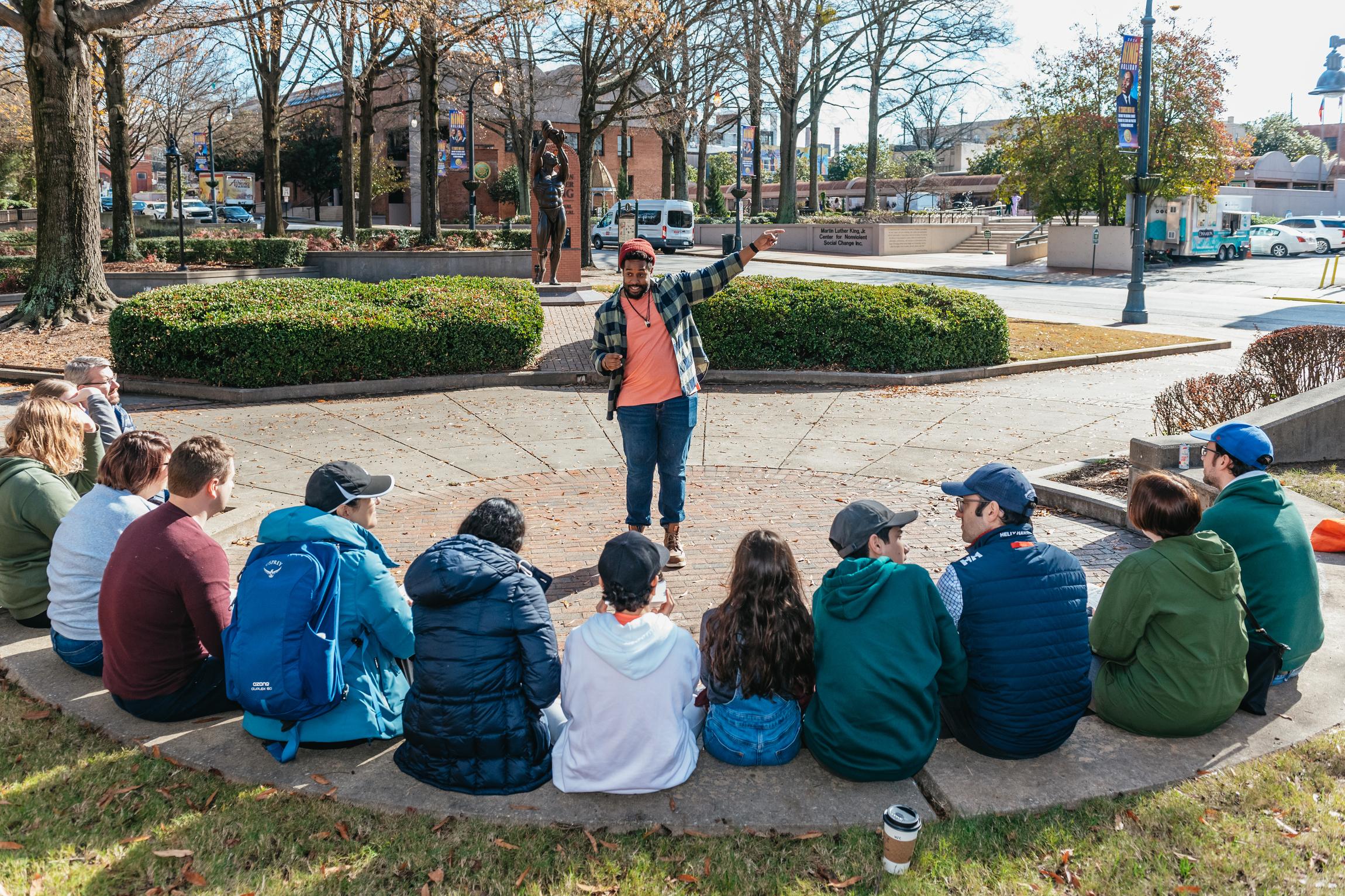
Journey through the heart of America's Civil Rights Movement on this immersive 4-hour guided tour
Reserve
Hand-picked by our editors — only the best 5 experiences from 140 reviewed.
Verified partners for every tour, free cancellation where available, and instant confirmation on every booking.
4 hr
Journey through the heart of America's Civil Rights Movement on this immersive 4-hour guided tour
Reserve
2 hr 30 min
Journey through Dr. King's Atlanta on a guided walk visiting landmarks from the civil rights era
Reserve
1 hr 30 min
Discover the southern capital's most iconic neighborhoods and landmarks on a narrated 90-minute ride
ReservePrices from verified partners. Availability updates in real time at checkout. Free cancellation policies apply where shown.
The landmarks, rooms, and views travelers on this tour remember — all visible on a single visit.
View personal papers of Dr. King including original drafts of his most significant speeches in this dedicated space.
Sit at a 1960s-era counter to experience the intensity of a non-violent protest through immersive audio and visual technology.
This gallery explores the global struggle for human rights by contrasting historical figures with contemporary activists.
The National Center provides a curated, indoor educational narrative, whereas the MLK Historical Park offers an immersive, site-specific journey through the legacy of the movement; most visitors who seek a comprehensive understanding prefer to book an atlanta black history & civil rights tour to connect the two locations.
| Feature | Top pick Civil & Human Rights Center | MLK Jr. National Historical Park |
|---|---|---|
Experience Type |
Indoor museum exhibits | |
Setting |
Modern building complex | |
Interaction Level |
High (multimedia/interactive) | |
Key Focus |
Global and domestic human rights | |
Duration |
2–3 hours | |
Cost |
16 USD (summer) | |
| See tickets → |
Verdict: Those interested in atlanta black history & civil rights tour tickets should choose the Center for thematic context and the Park for tangible proximity to the historical events.
Choose your ticket, select your date, and reserve in under two minutes. Secure checkout handled by our verified partner.
Instant confirmation by email, with a mobile voucher you can save offline. No printing, no queuing at a collection desk.
Arrive at the entrance, show your voucher on your phone, and walk in. Most tickets include priority or skip-the-line access.
Practical details for your visit straight from our verified partners — hours, access, rules, and how to get there.
100 Ivan Allen Jr. Blvd
Check in at the guest services desk
Take the MARTA train to the Peachtree Center station and walk 10 minutes.
Paid parking is available at nearby garages adjacent to Pemberton Place.
Casual and comfortable attire is recommended for exploring the atlanta black history & civil rights tour. Wear comfortable walking shoes as you navigate the multiple gallery levels.
All bags are subject to search upon entry to the atlanta black history & civil rights tour. We recommend traveling light to expedite your security screening process.
Non-commercial photography is permitted in most areas of the atlanta black history & civil rights tour. Please note that photography is strictly prohibited inside The Morehouse College Martin Luther King, Jr. Collection.
The atlanta black history & civil rights tour is fully wheelchair accessible. Elevators provide access to all exhibit levels, ensuring an inclusive experience for all visitors.
The atlanta black history & civil rights tour offers the Change Agent Adventure: Children's Gallery. This interactive space is designed to engage young visitors in learning about civic action.
Food and beverages are not permitted inside the exhibit galleries of the atlanta black history & civil rights tour. Water fountains are available in the lobby area.
Best time to go, insider tips, nearby landmarks, and the cancellation fine print — flip through to skim what matters to you.
How crowds, weather, and events shift across the year.
Warmer temperatures and high demand for indoor cultural experiences in Atlanta.
Pleasant weather ideal for walking between downtown museums.
Quieter period with manageable crowds for a detailed tour experience.
Mild climate perfect for visiting nearby outdoor landmarks after your tour.
Small details that turn a good visit into a great one.
Book your atlanta black history & civil rights tour tickets online to guarantee your preferred time slot.
Non-bookable sights within a short walk — free to visit, easy to pair.
World-class aquatic facility showcasing thousands of marine animals.
Interactive experience focused on the history of the famous beverage brand.
Public park hosting the 1996 Summer Olympics legacy fountain.
Flexible, no hidden fees.
All ticket sales for the atlanta black history & civil rights tour are final. No refunds or exchanges are permitted for the 16 USD entrance fee.
Hand-picked options within walking distance — pick a district for vibe, or a specific hotel for convenience.
Comfortable suites within walking distance of major downtown attractions.
The National Center for Civil and Human Rights stands on land donated by the Coca-Cola Company, a downtown block that had held little more than pavement. It opened in June 2014. Philip Freelon and HOK designed its two curved brick wings to read as arms interlocked, a gesture legible only from the street. That building anchors most routes of the Atlanta Black History & Civil Rights Tour, at 100 Ivan Allen Jr. Blvd. Atlanta accumulated the material for such an institution over a century. Auburn Avenue, the corridor known as Sweet Auburn, was wealthy enough that Fortune magazine in 1956 called it the richest Black street in America. Its banks, insurance houses, newspapers and churches formed an economy segregation could not reach. Martin Luther King Jr. was born at 501 Auburn Avenue in 1929 and later co-pastored Ebenezer Baptist Church a short walk from the front door. Morehouse College, Spelman College and the wider Atlanta University Center supplied the organisers, lawyers and student strategists the movement ran on. Any serious Atlanta civil rights landmarks tour crosses this ground because the ground did the work. The collections reflect that inheritance. The Center displays rotating selections from the Morehouse College Martin Luther King Jr. Collection, some 13,000 items including sermon drafts on hotel stationery and books annotated in King's own hand. An upper gallery turns from the American South to global human rights, naming prisoners of conscience and campaigns still unresolved. The best-known installation is a lunch counter. Visitors sit, flatten their hands on the surface, put on headphones and hear what a sit-in participant heard. Atlanta Black History & Civil Rights Tour tours generally treat that counter as the centre of the visit, and few people last the full recording. What distinguishes the city is continuity. The King Center, the historic Ebenezer sanctuary and the birth home sit inside a single federal park boundary half a mile east of downtown, while the Center itself faces Pemberton Place. A guided black heritage tour of Atlanta can move from 1929 to 1968 to the present in under two miles of walking. Atlanta Black History & Civil Rights Tour tour routes are short by design: the distances are small, the archive is dense, and most of the buildings are still in use. Congregations still meet, classes still convene, and the record is not sealed behind glass.
"The distances are small, the archive is dense, and most of the buildings are still in use."
A step-by-step walkthrough of the visit — what you'll see, how long each stage takes, and the details that matter.
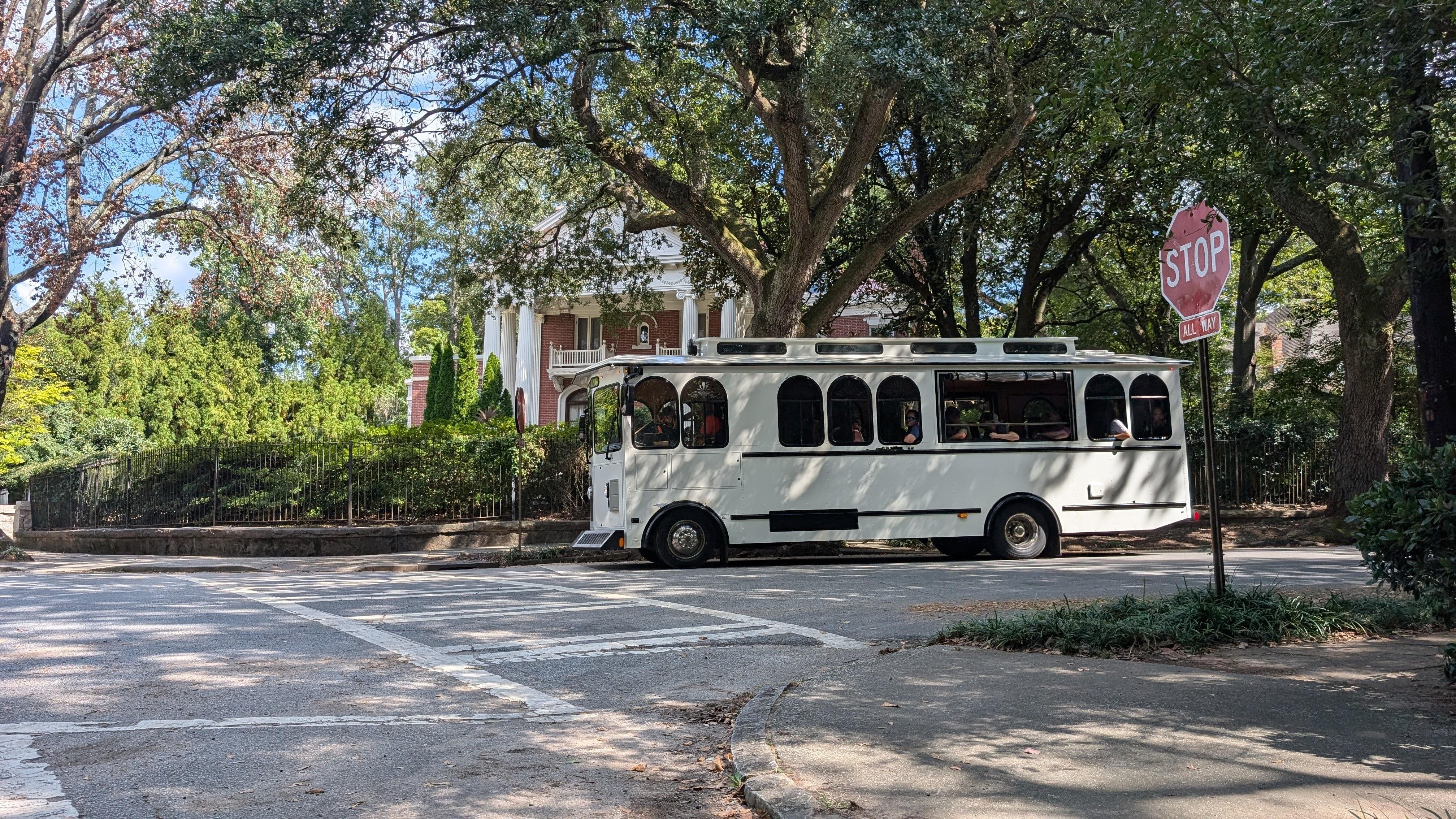
You start at 100 Ivan Allen Jr. Blvd, where Pemberton Place opens between the aquarium and the Center's curved brick wall. Aim to arrive between 10:00 and 15:00 — the doors close at 17:00 on every day the building is open, and the galleries take longer than people plan for. Atlanta Black History & Civil Rights Tour tickets that bundle general admission cover the 16 USD entry per person, so you go straight through to the ground-floor rooms. You read the first placards standing, because there is nowhere to sit until the counter. Then you take a stool, flatten your palms on the laminate, and put on the headphones. The voices begin behind your left ear and move closer. Most people lift the headphones early. You probably will too. Upstairs the register changes: photographs of living activists, maps of current campaigns, a wall of names you do not recognise and then one you do. You leave through the courtyard, blinking. From there it is roughly twenty-five minutes on foot east to Auburn Avenue — Ebenezer's brick facade, the reflecting pool at the King Center, the birth home behind its iron fence. If your legs are finished, the trolley loop covers the same ground seated, and the bus route adds the Atlanta University Center campuses. You end the day where the city began arguing with itself.
The center is open Thu-Fri and Sun from 12:00–17:00, and Saturday from 10:00–17:00.
General admission for the atlanta black history & civil rights tour is 16 USD per person.
Yes, the center is fully accessible to all guests with mobility needs.
Please bring your online booking confirmation and a valid ID for entry.
Photography is allowed, but not of the MLK collection; the atlanta black history & civil rights tour enforces this strictly.
A typical visit to the museum lasts 90-120 minutes.
Yes, children are welcome and can explore the specialized Children's Gallery.
Prohibited items include weapons and large bags; please check the atlanta black history & civil rights tour security guidelines.
Parking is available in paid garages near the center on Ivan Allen Jr. Blvd.
All sales are final; we do not offer refunds on atlanta black history & civil rights tour tickets.