4 hr
Atlanta Black History & Civil Rights Bus Experience
Journey through the heart of America's Civil Rights Movement on a guided coach tour of Atlanta's most significant African-American heritage sites
Reserve
The counter still hums, the margins still argue.
Hand-picked by our editors — only the best 9 experiences from 214 reviewed.
Verified partners for Atlanta Civil Rights tours, free cancellation where available, and instant confirmation on every booking.
4 hr
Journey through the heart of America's Civil Rights Movement on a guided coach tour of Atlanta's most significant African-American heritage sites
Reserve
2 hr 30 min
Journey through the life and legacy of Dr. King at Atlanta's most significant civil rights landmarks
Reserve
1 hr 30 min
Discover the southern capital's iconic landmarks and neighborhoods on a narrated 90-minute ride
ReservePrices from verified partners. Availability updates in real time at checkout. Free cancellation policies apply where shown.
The landmarks, rooms, and views travelers on Atlanta Civil Rights tours remember — all visible on a single visit.
Explore the history of the American Civil Rights Movement from the Jim Crow era to the present day. This immersive gallery features a simulated lunch counter protest experience.
Discover the global struggle for human rights in this interactive gallery. Visitors learn about the fundamental rights of all people through engaging displays.
View rare documents and personal belongings of Dr. Martin Luther King, Jr. This exhibit highlights his life's work and legacy.
This interactive space allows younger visitors to learn about power and influence in a creative way. It is designed to inspire the next generation of changemakers.
Every Atlanta Civil Rights tour side-by-side — duration, what's included, how you redeem.
| Experience | Duration | Rating | Pickup | Guide | Free cancel. | Price | |
|---|---|---|---|---|---|---|---|
|
Standard Entry Most popular
Atlanta Black History & Civil Rights Bus Experience
|
4 hr | ★ 4.9 | ✓ | ✓ | ✓ | €60 | Book → |
|
Standard Entry
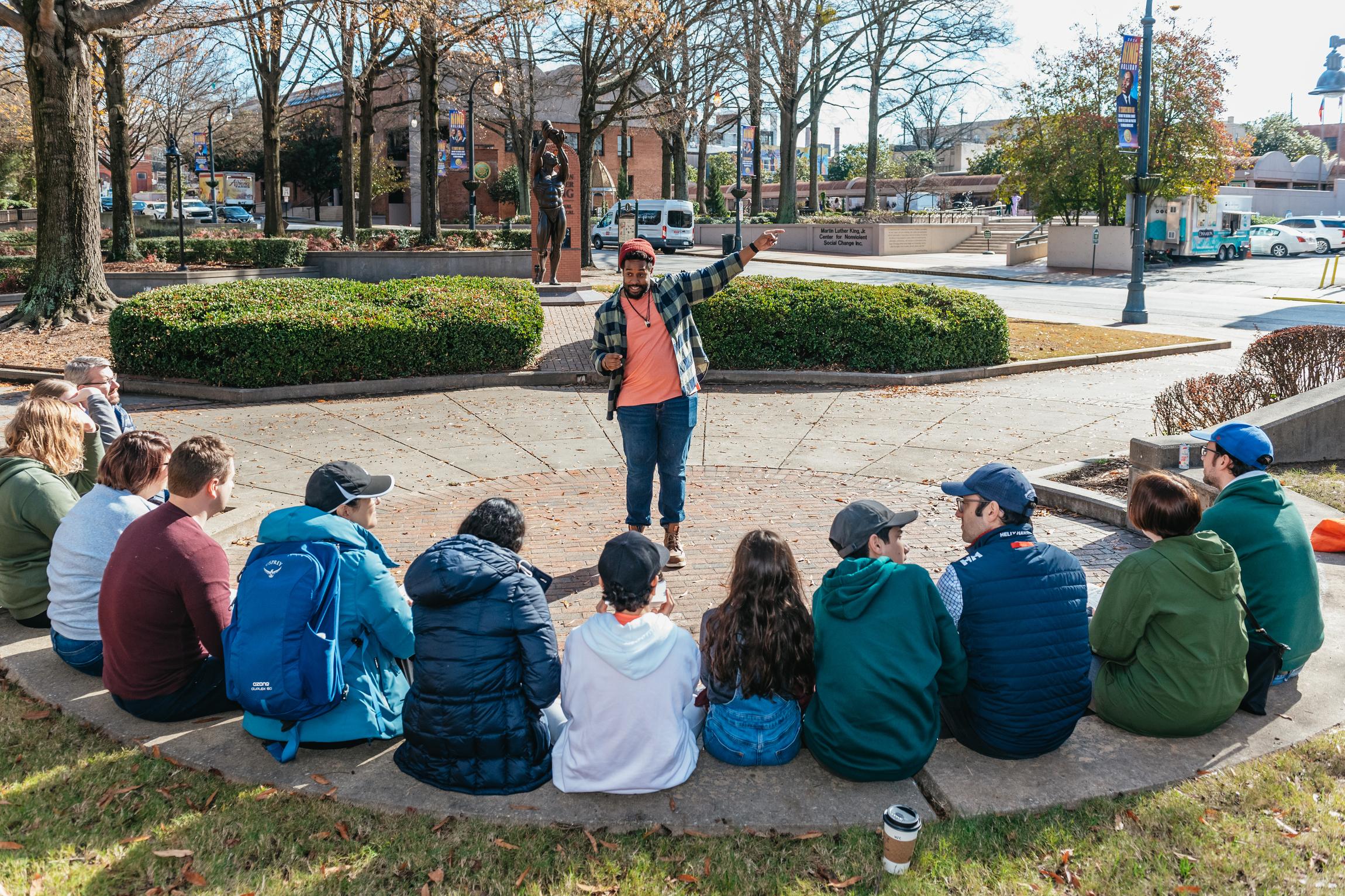
MLK Jr. Historical Park Guided Walk
|
2 hr 30 min | ★ 5.0 | — | ✓ | ✓ | €35 | Book → |
|
Standard Entry
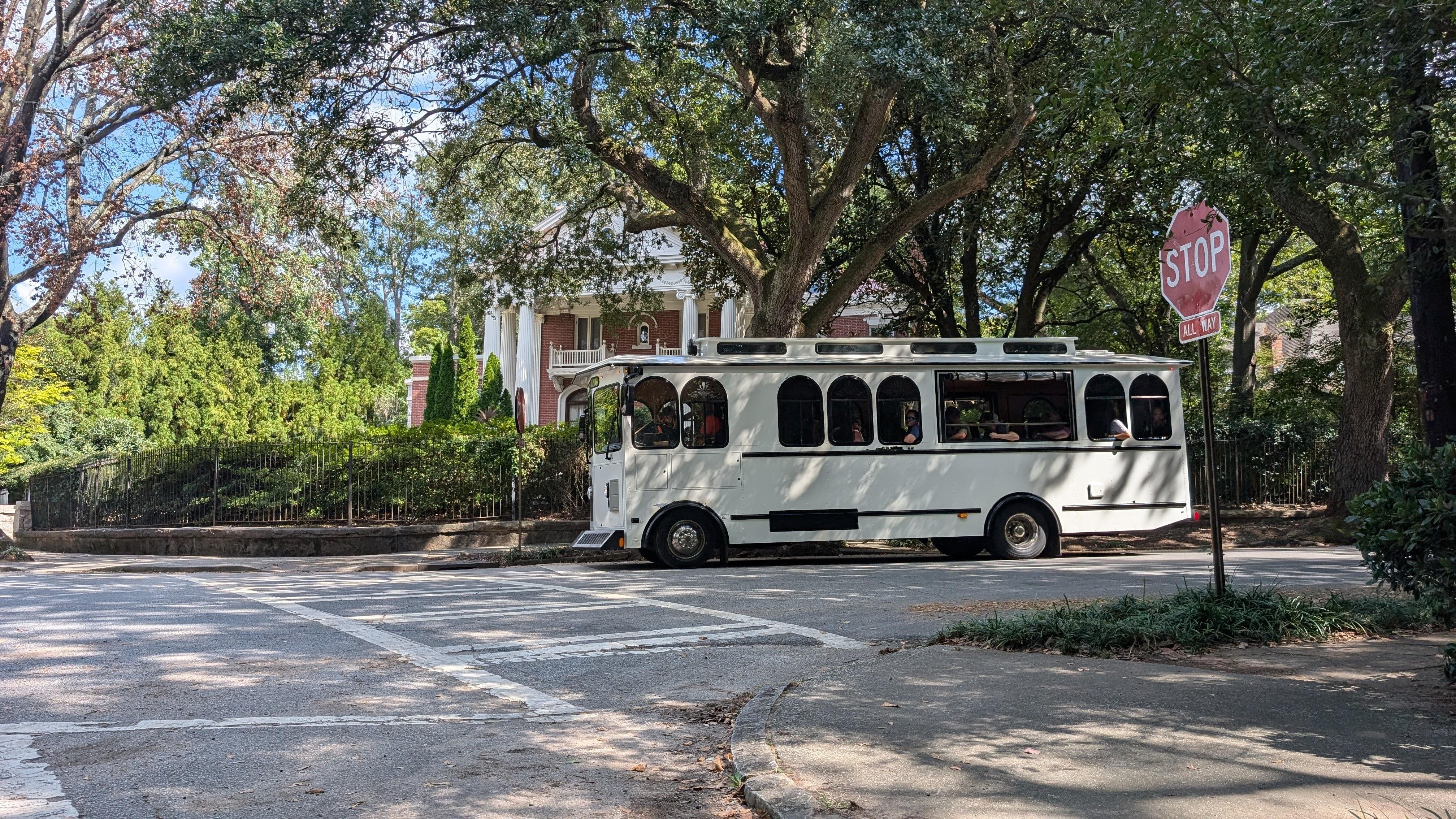
Historic Atlanta Trolley Experience
|
1 hr 30 min | ★ 4.7 | — | ✓ | ✓ | €31 | Book → |
All prices from verified partners. Availability and exact terms confirmed at checkout.
The center provides a comprehensive, artifact-driven educational experience, while the city landmarks are best explored through outdoor walking atlanta civil rights tour tours. They complement each other; most visitors who do both find the museum more immersive and the walking path more contextual.
| Feature | Top pick National Center | Guided Walking Tour |
|---|---|---|
Experience Type |
Museum Exhibits | Guided Walking Exploration |
Setting |
Indoor Climate-Controlled | Outdoor Street-Level |
Depth of Topic |
High Archival Detail | High Historical Narrative |
Engagement Level |
Interactive Galleries | Group Discussion |
Flexibility |
Self-Paced Exploration | Fixed Schedule Required |
Average Cost |
16 USD (summer) | 35–50 USD (summer) |
| See tickets → |
Verdict: Choose the museum for in-depth artifact viewing with your atlanta civil rights tour tickets, or opt for a guided atlanta civil rights tour tour if you prefer walking through the physical sites where history unfolded.
Choose your ticket, select your date, and reserve in under two minutes. Secure checkout handled by our verified partner.
Instant confirmation by email, with a mobile voucher you can save offline. No printing, no queuing at a collection desk.
Arrive at the entrance, show your voucher on your phone, and walk in. Most tickets include priority or skip-the-line access.
Practical details for Atlanta Civil Rights tickets straight from our verified partners — hours, access, rules, and how to get there.
100 Ivan Allen Jr. Blvd. Atlanta, GA 30313
Primary entry point for all visitors
Open in Google MapsTake the Gold or Red line to the Civic Center MARTA station and walk 15 minutes southwest.
Paid parking is available at the World of Coca-Cola or Georgia Aquarium parking decks.
Casual, comfortable attire is recommended for exploring the exhibits. Please ensure footwear is suitable for walking through the museum galleries.
Backpacks and large bags are discouraged as there is no storage facility. All personal items may be subject to visual inspection by security staff upon entry.
Non-flash photography is permitted in most areas. Photography and video are strictly prohibited in the King Gallery to protect sensitive artifacts.
The facility is fully wheelchair accessible. A limited number of wheelchairs are available for visitor use at the main entrance on a first-come, first-served basis.
Mobile phones are permitted for quiet use. Please silence devices to maintain a respectful environment for other visitors.
Families are encouraged to explore the interactive children's gallery. Strollers are permitted throughout the museum.
Food and beverages are not allowed inside the exhibit galleries. Please finish all drinks or food items before entering the museum.
Only service animals specifically trained to assist individuals with disabilities are permitted inside the museum. Pets are not allowed.
The Atlanta civil rights tour experience is enhanced by the use of interactive listening stations. Please be mindful of others in quiet reflection areas.
100 Ivan Allen Jr. Blvd. Atlanta, GA 30313
Primary entry point for all visitors
Get directionsBest time to go, insider tips, nearby landmarks, and the cancellation fine print — flip through to skim what matters to you.
How crowds, weather, and events shift across the year.
Warmer weather with peak tourism activity, making early arrival important.
Pleasant temperatures and fewer crowds compared to summer months.
Ideal for school groups and outdoor exploration of surrounding parks.
Quieter period, perfect for spending extra time in indoor galleries.
Small details that turn a good visit into a great one.
Arriving at 10:00 on Saturdays ensures enough time to see all exhibits before closing.
Experience the simulated protest lunch counter to gain insight into the Freedom Riders' struggles.
Spend extra time in the Morehouse College Martin Luther King, Jr. Collection for rare historical artifacts.
Visit the Voice to the Voiceless gallery for a contemplative atmosphere near the end of your visit.
Weekdays are generally quieter, though the museum is only open from Thursday to Sunday.
Non-bookable sights within a short walk — free to visit, easy to pair.
A massive urban park created for the 1996 Summer Olympics.
One of the largest aquariums in the world housing thousands of animals.
Features the history of the iconic soda brand and tasting experiences.
Interactive and educational space for younger children.
Flexible, no hidden fees.
Tickets are non-refundable after purchase. Please confirm your date prior to completing your transaction.
Hand-picked options within walking distance — pick a district for vibe, or a specific hotel for convenience.
Convenient access to major downtown attractions and transit.
High-end stays located near the heart of the city's tourism hub.
In July 1963, Mayor Ivan Allen Jr. flew to Washington and testified before Congress in favor of the bill that became the Civil Rights Act of 1964 — the only white elected official from a major Southern city to do so.
The boulevard that now carries his name runs past the front doors of the National Center for Civil and Human Rights, the building where an Atlanta Civil Rights Tour usually begins, at 100 Ivan Allen Jr. Blvd. The address is not incidental. Atlanta drafted much of the movement's paperwork, and it kept the receipts.
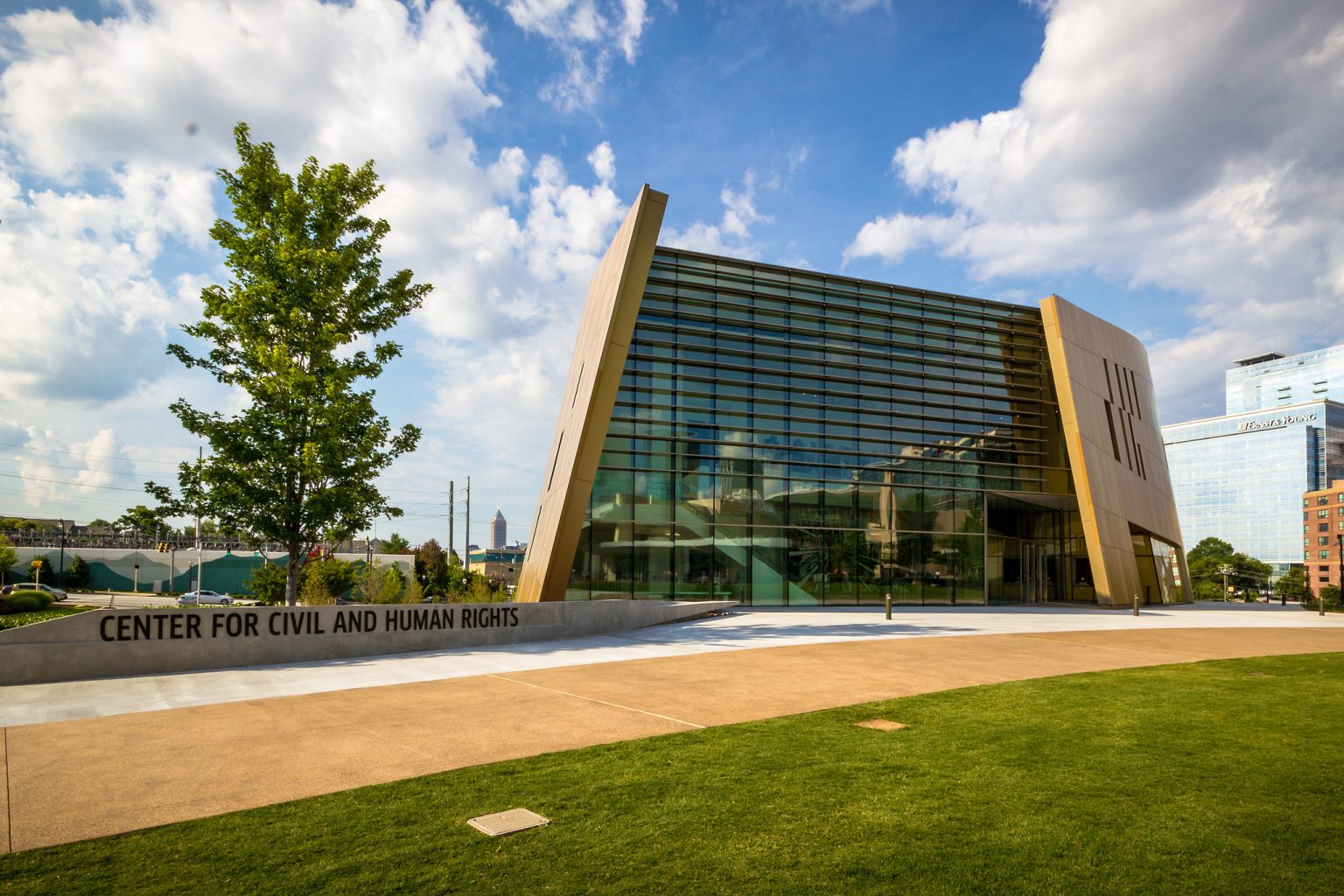
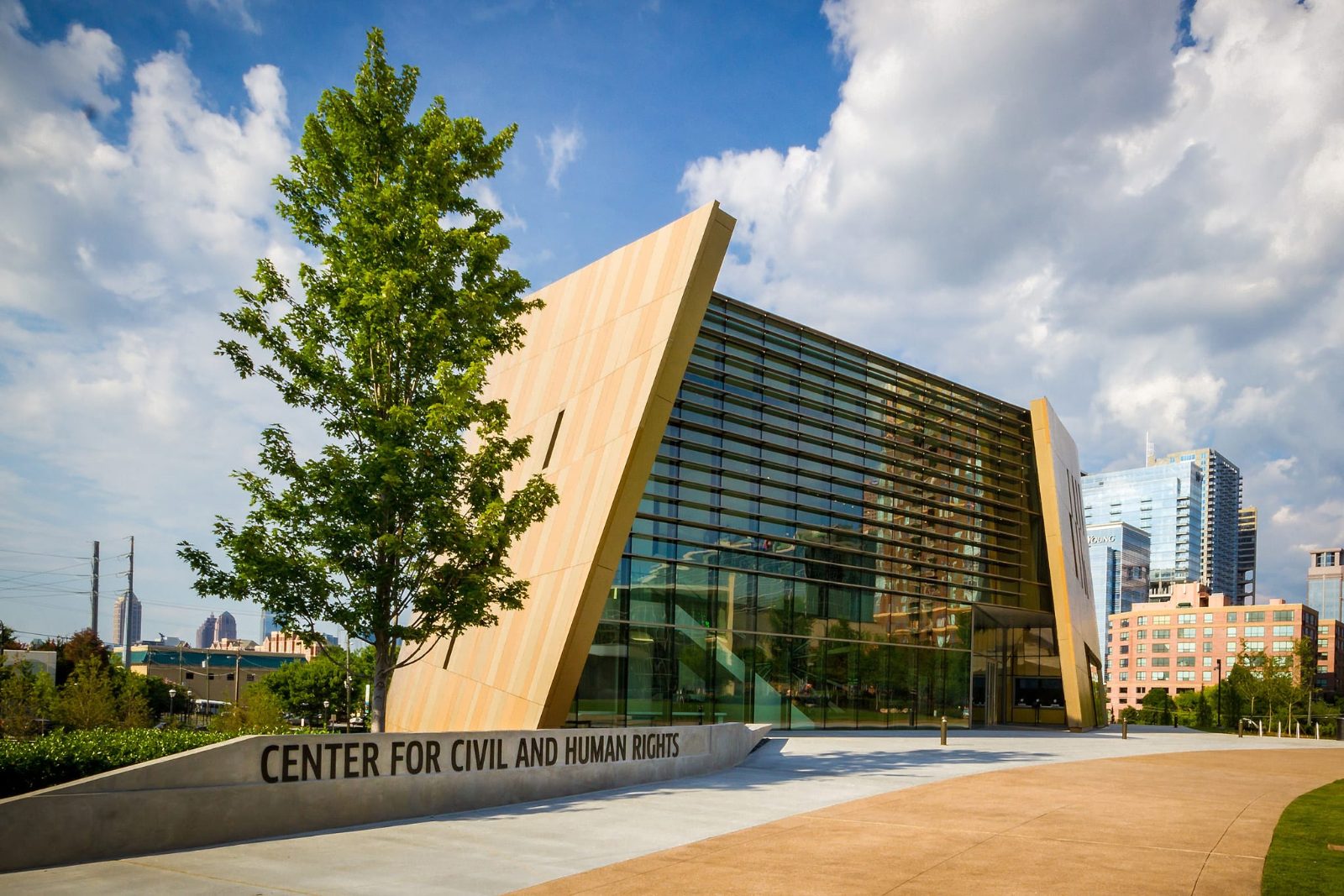
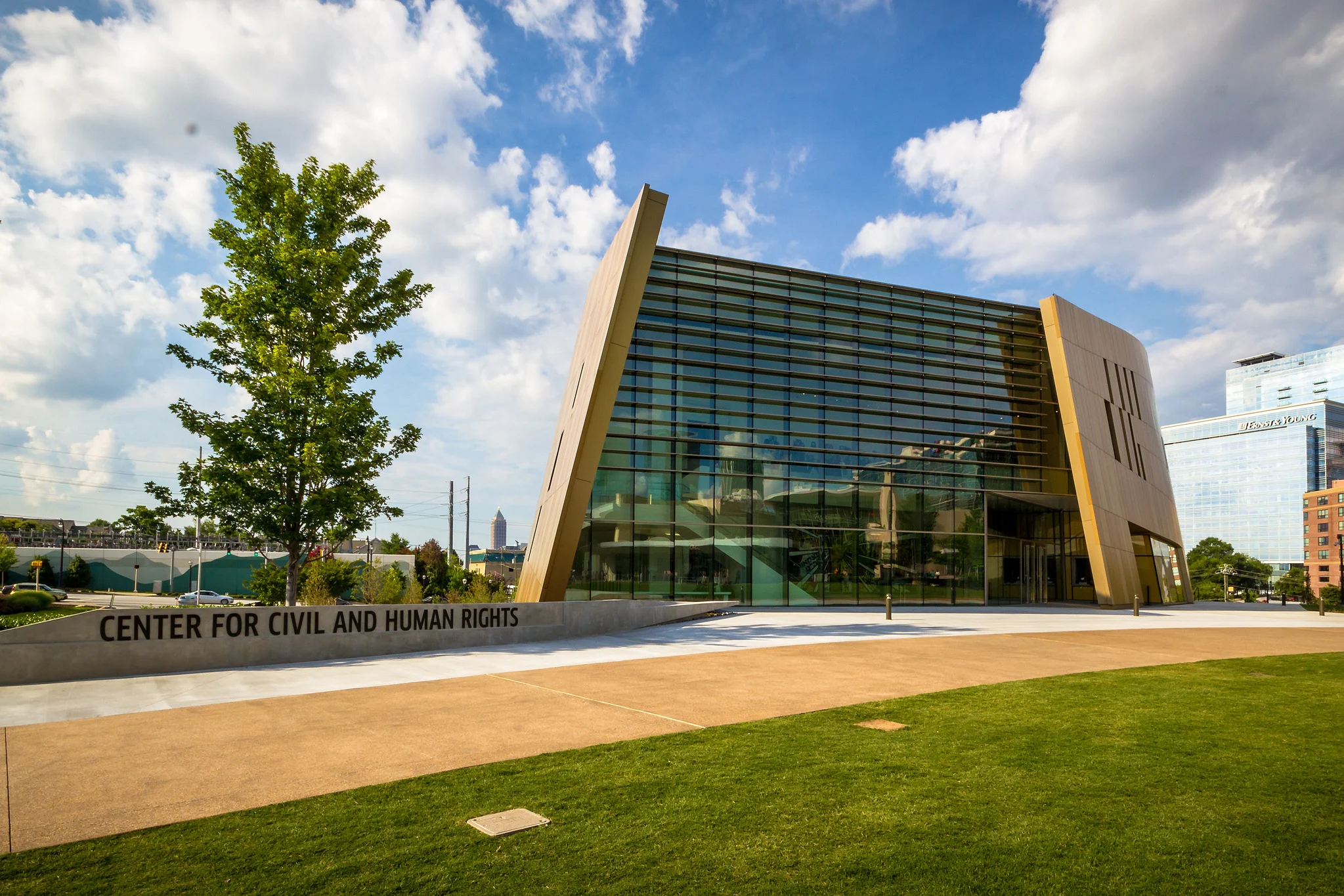
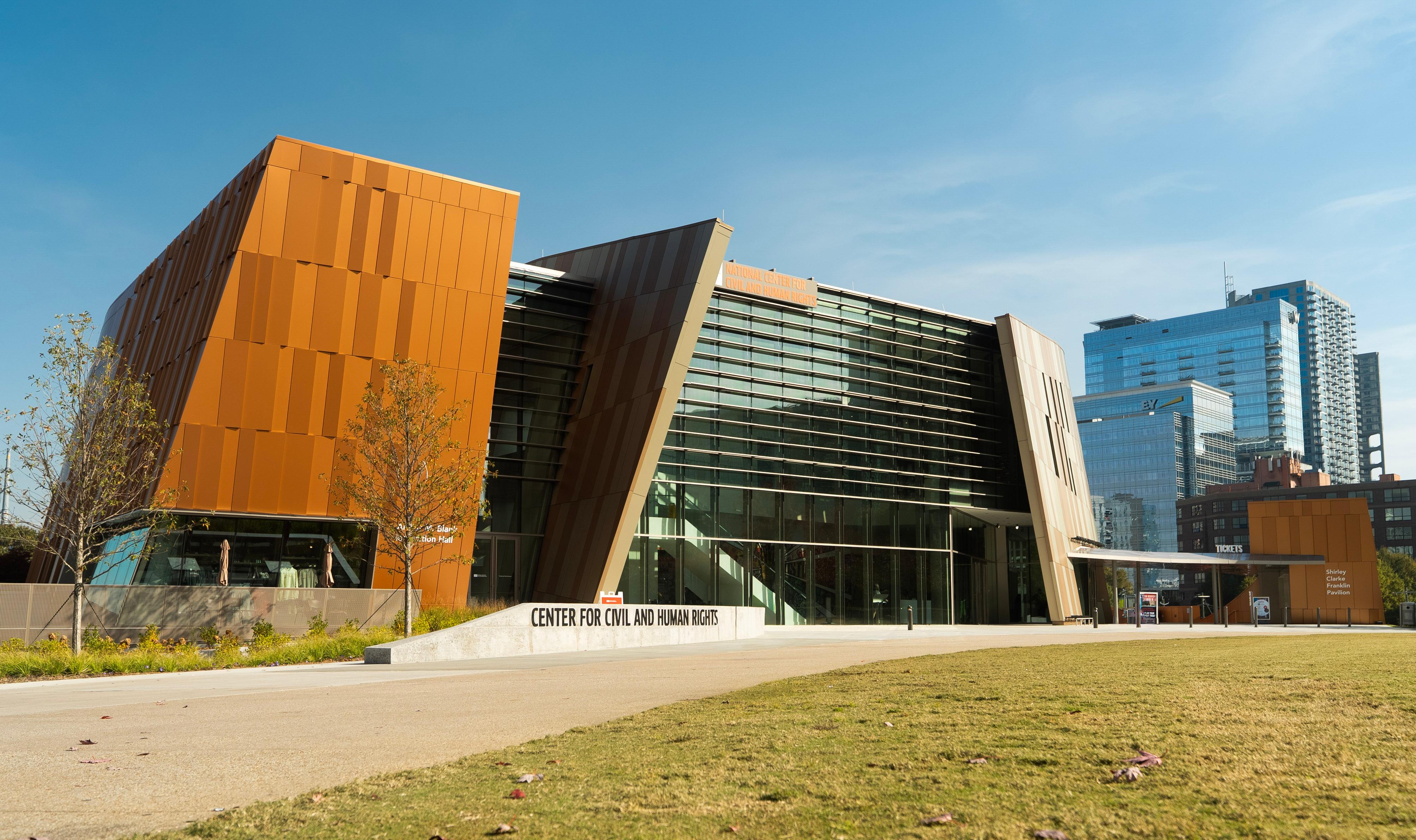
The Center opened in June 2014 on Pemberton Place, wedged between the Georgia Aquarium and the World of Coca-Cola at the northern edge of Centennial Olympic Park. Philip Freelon designed it with Antoine Predock. Two curved walls of dark and pale panels sweep toward each other across the lawn and read, from a distance, as arms linked in a march. The scale is deliberately modest. The building yields to the city around it. Atlanta Civil Rights Tour tours radiate outward from this single block.
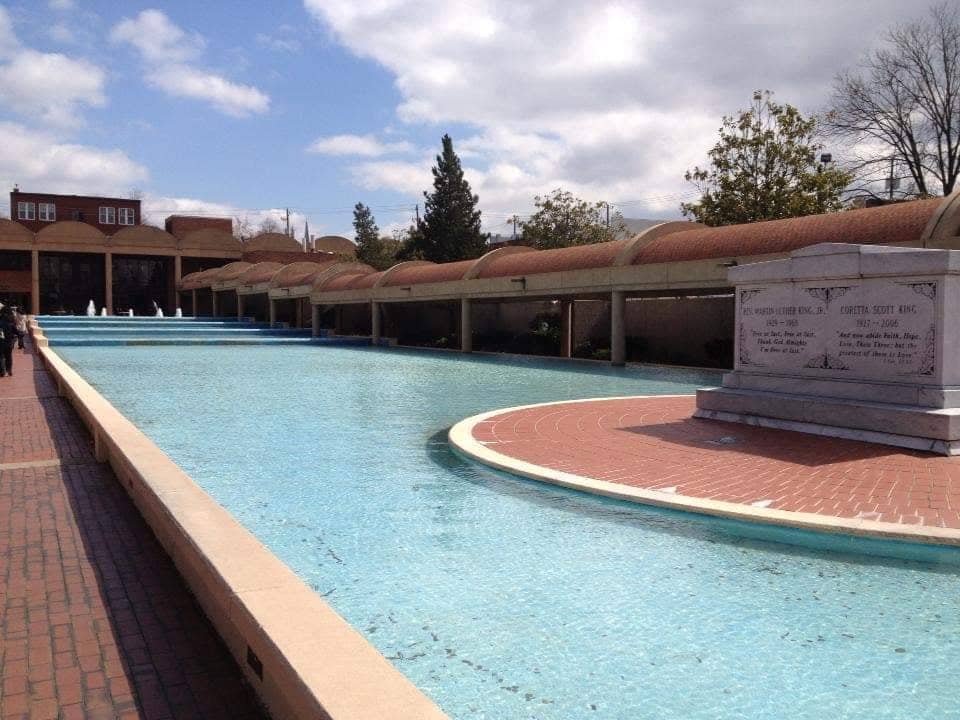
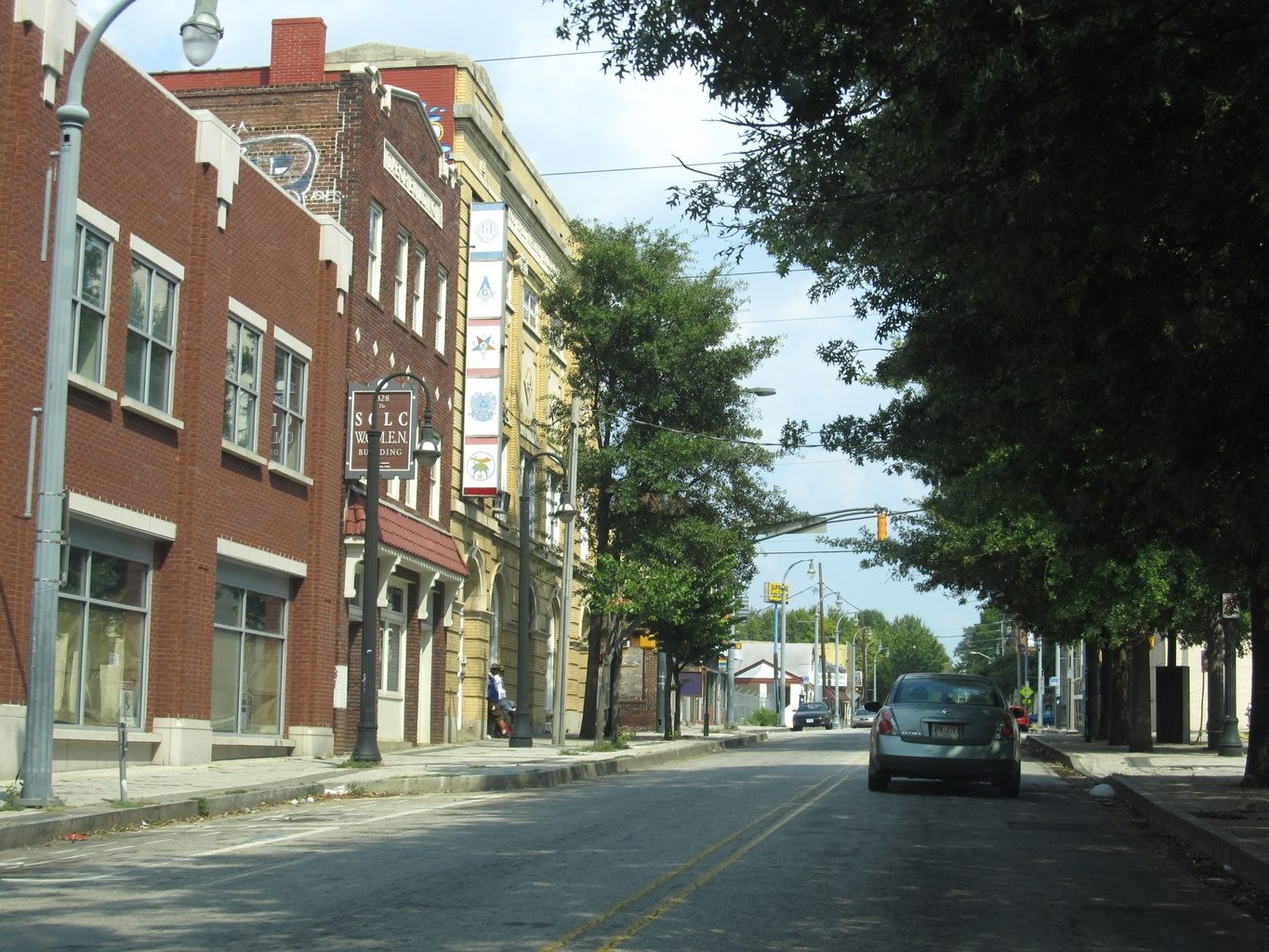
Those routes take several shapes. An Atlanta civil rights walking tour follows Auburn Avenue through Sweet Auburn, past Ebenezer Baptist Church, Fire Station No. 6 and the King birth home. An Atlanta civil rights bus tour reaches the Atlanta University Center, where Morehouse admitted a fifteen-year-old Martin Luther King Jr. in 1944 and where students published "An Appeal for Human Rights" in March 1960. An Atlanta civil rights bike tour threads the Eastside Trail toward the same neighborhoods. A serious Atlanta Civil Rights Tour tour treats these addresses as one continuous argument rather than a checklist.
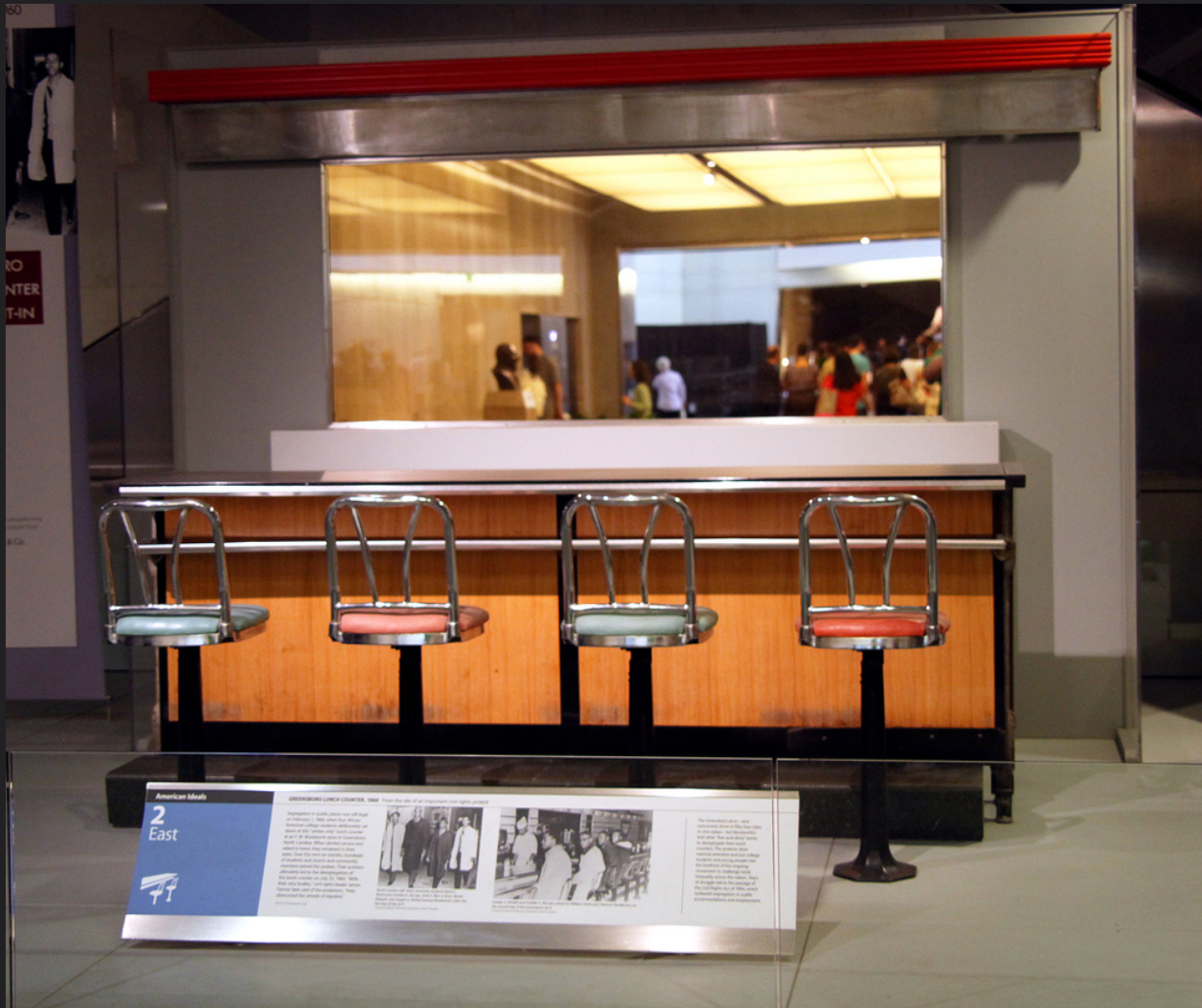
Inside the Center, the material carries the weight. "Rolls Down Like Water" rebuilds a lunch counter with headphones bolted beneath the lip. "Voice to the Voiceless" shows rotating selections from the Morehouse College Martin Luther King Jr. Collection — sermon drafts in ballpoint, margins crowded with revisions and second thoughts. Upstairs, "Spark of Conviction" widens the frame to global human rights, and its wall of faces refuses the comfort of a closed chapter. That refusal is the point. Atlanta preserved its movement geography while the buildings were still in use rather than after they became relics, and the churches, campuses and storefronts on the Atlanta black history and civil rights tour circuit still hold congregations, students and customers. An Atlanta Civil Rights Tour reads, finally, less like sightseeing than like reading a city's unfinished draft.

"Atlanta drafted much of the movement's paperwork, and it kept the receipts."
A step-by-step walkthrough of Atlanta Civil Rights tickets — what you'll see, how long each stage takes, and the details that matter.
On a Saturday the doors open at 10:00, and Pemberton Place is already loud with aquarium traffic. You walk through it. At the desk inside 100 Ivan Allen Jr. Blvd you scan your Atlanta Civil Rights Tour tickets, hand over your bag, and take the ramp down into the lower gallery, where the light drops by half.
The lunch counter comes first. You sit, fit the headphones, and press both palms flat to the laminate. The voices start behind your left shoulder. The stool shakes under you. The instruction is simple — keep your hands down — and most people lift them inside ninety seconds. You notice exactly when you do. You stand up quieter than you sat.
You slow down in the case room that follows, where King's handwriting runs across sermon drafts under low glass, crossings-out included. You read three pages and skip none. Upstairs, the global human rights gallery gives you a wall of portraits and no captions until you ask for them; you spend longer there than planned, then take the stairs back to the lobby and step out onto the lawn before the 17:00 close.
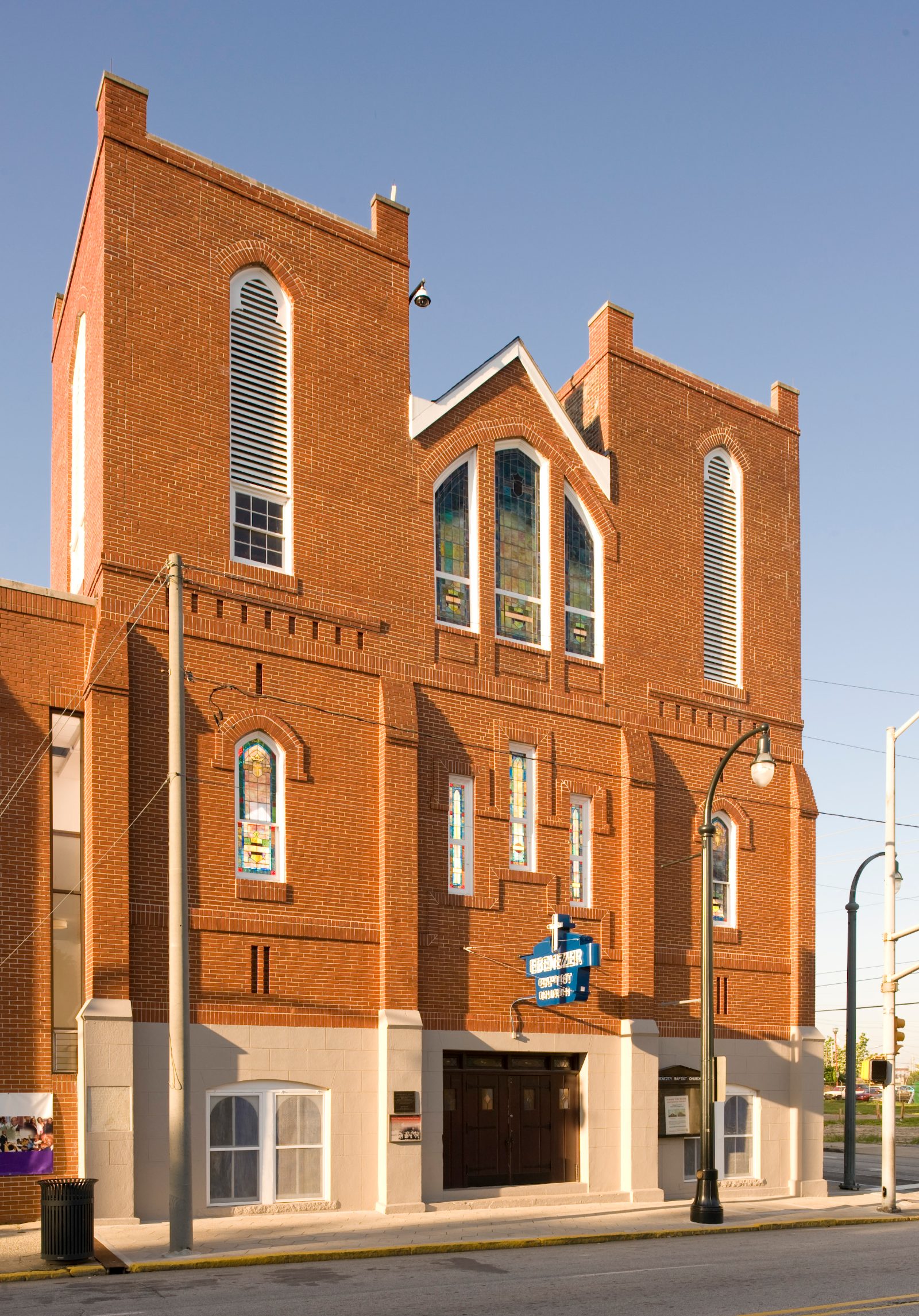
From the curb, the Atlanta civil rights walking tour picks up roughly a mile east on Auburn Avenue, where Ebenezer's brick front still faces the street it always did.
The National Center for Civil and Human Rights is open Thursday–Friday 12:00–17:00, Saturday 10:00–17:00, and Sunday 12:00–17:00.
Yes, the National Center for Civil and Human Rights is fully wheelchair accessible and offers loaner wheelchairs.
No, there is no storage for large bags at the National Center for Civil and Human Rights, so please leave them in your vehicle.
Yes, the National Center for Civil and Human Rights is family-friendly and includes an interactive children's gallery.
General admission to the National Center for Civil and Human Rights is 16 USD per person.
We recommend allowing 90–120 minutes to fully experience the National Center for Civil and Human Rights galleries.
Non-flash photography is allowed in most areas of the National Center for Civil and Human Rights, but prohibited in the King Gallery.
The National Center for Civil and Human Rights is located at 100 Ivan Allen Jr. Blvd. in downtown Atlanta and is accessible by MARTA.
Yes, the World of Coca-Cola and Georgia Aquarium are within a 5-minute walk of the National Center for Civil and Human Rights.