
English| EUR
Suggested for you
More currencies
Choose a language
Atlanta's reputation travels ahead of it, usually attached to a citywide statistic that has little to do with the four or five neighborhoods most visitors ever set foot in. This is a research page, not a warning label: it separates the city's aggregate figures from the streets around Auburn Avenue, Centennial Olympic Park and the Beltline. Read it before you plan a civil rights itinerary, and you will know which numbers apply to you.
Quick answer
No — Atlanta is not dangerous for tourists in the districts they typically visit, provided visits fall inside the recommended 09:00–17:00 window, when daylight offers better visibility and safety in public areas. Atlanta is a city rather than a single attraction, so there is no admission fee and no gate: the practical variable is district and hour, not risk of entry.
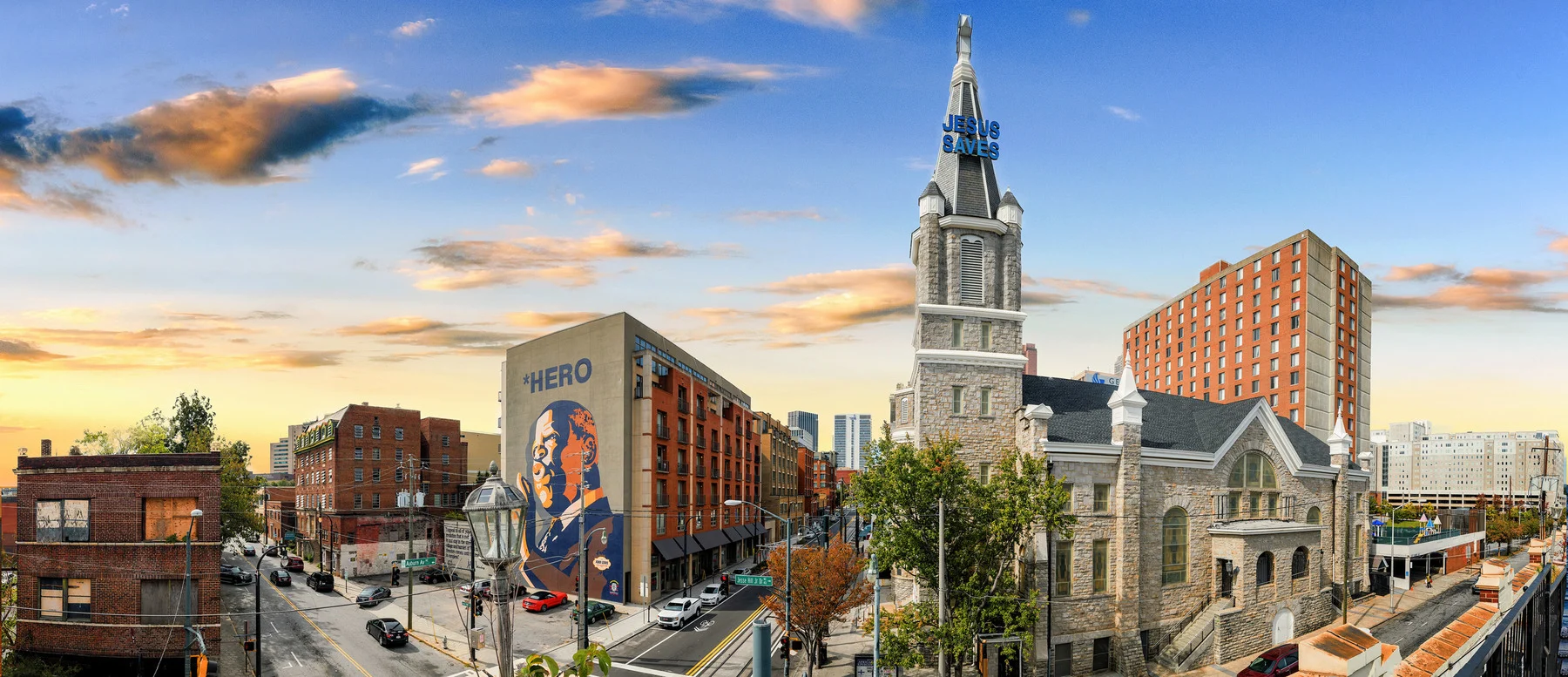
Atlanta's violent-crime rate is calculated across roughly 137 square miles and more than half a million residents, yet the corridor most visitors actually walk — Auburn Avenue to Centennial Olympic Park — measures under three miles end to end. That mismatch explains almost every anxious search. The question of whether is atlanta dangerous for tourists is nearly always answered with a figure drawn from an entire municipality, then applied to a handful of blocks that carry federal park rangers, university police, hotel security and steady daytime foot traffic. The two things are not the same measurement. The geography matters more than the statistic. The Martin Luther King Jr. National Historical Park, Ebenezer Baptist Church, the King Center and the birth home sit inside a National Park Service unit in Sweet Auburn, patrolled and staffed during operating hours. Downtown's museum cluster — the National Center for Civil and Human Rights, the Georgia Aquarium, the World of Coca-Cola — shares one landscaped block. Midtown, Inman Park and the Old Fourth Ward carry restaurant density and Beltline traffic well into the evening. Visitors who stay inside this arc are moving through the most surveilled and most populated parts of the metro. Atlanta landmarks that sit outside it, particularly in the far south and west quadrants, are residential rather than touristic and rarely appear on any itinerary. Address for orientation purposes is simply Atlanta, GA, USA; the city has no single perimeter to cross. The useful reframing is temporal. Anyone comparing an Atlanta civil rights tour against safety concerns should note that the recommended window of 09:00–17:00 exists because daylight improves visibility in public areas, not because a curfew applies. Most civil rights sites keep daytime hours anyway, so the schedule and the safety advice point the same direction. There is no entrance fee to the city and no ticket to weigh; the decision is which districts to spend hours in and when. So the honest response to is atlanta dangerous for tourists is that the aggregate number is real but geographically misplaced. Treat Atlanta as a set of distinct districts rather than one undifferentiated risk profile. Verify current conditions and any site closures at https://www.atlanta.gov before finalizing plans, and build the day around the heritage corridor, where density, staffing and daylight all work in a visitor's favor.
“The aggregate number is real, but it is measured across 137 square miles — and visitors walk three.”
To prioritize personal safety and visibility, visitors should plan their exploration within the best arrival window of 09:00–17:00. Daylight hours provide optimal conditions for navigating public areas throughout the city.
Mild, 60–75°F; pleasant for walking. Daily activities are best enjoyed during daylight hours when visibility is highest.
Cool, 55–70°F; stable conditions. Consistent daylight remains the safest framework for public exploration.
—; daylight hours. Focusing visits between 09:00 and 17:00 ensures better situational awareness in public spaces.
—; daylight hours. Maintaining activity within the 09:00–17:00 window helps mitigate risks associated with night travel.
Verdict: The best arrival window is 09:00–17:00, as daylight hours offer better visibility and safety in public areas.
Most trouble visitors run into in Atlanta comes from a handful of repeatable behaviors, not from bad luck. These are the patterns that turn an ordinary day into a police report.
Leaving bags, laptops, or shopping visible in a parked car
Take valuables with you or lock them in the trunk before you park, not after you arrive. Smash-and-grab theft from parked vehicles is the single most common crime against visitors, and it happens in daylight in busy lots.
Wandering off well-traveled corridors while following a map app
Stay on the main pedestrian routes between sites and use rideshare or transit to bridge gaps. Walking directions often route through quiet industrial blocks or under highway overpasses that look fine on screen and feel very different on foot.
Treating Atlanta as one walkable downtown core
Plan point-to-point trips between neighborhoods instead of improvising long walks. Districts here are separated by wide arterial roads and interchanges with poor sidewalks.
Carrying a phone loosely in hand at intersections or on patios
Keep it pocketed while moving and set it face-down away from railings and open windows when seated.
Arriving outside the 09:00–17:00 window for outdoor sites
Build your day around 09:00–17:00, when daylight gives better visibility and public areas carry steady foot traffic.
Displaying cash, jewelry, or camera gear openly in unfamiliar areas
Withdraw cash indoors at bank ATMs, keep expensive gear bagged between stops, and split cards and cash across two pockets.
Atlanta is a sprawling city, and utilizing established public transit or verified rideshare services is the most secure method for visiting historical landmarks. Navigating between civil rights sites is best managed by combining MARTA rail lines with point-to-point car services.
MARTA Red/Gold Line to Peachtree Center Station
Verified rideshare (Uber/Lyft) to King Historic District
Within the Martin Luther King Jr. National Historical Park
Prioritize MARTA rail for longer distances between neighborhoods and rely on reputable rideshare apps for short, direct trips between specific venues. Always confirm your driver's identity in the app before entering any vehicle.
Atlanta is manageable for visitors who prepare a few practical safeguards before and during the trip.
Everything you need to know about is atlanta dangerous for tourists
Like any major metropolitan area, Atlanta has areas with varying levels of safety, so is atlanta dangerous for tourists depends largely on where you go and your situational awareness. Most tourist-centric areas are well-patrolled and welcoming to visitors.
Walking in downtown areas is generally common, though visitors should remain aware of their surroundings. To determine if is atlanta dangerous for tourists, travelers often look at specific neighborhoods rather than the city as a whole.
Yes, these guided experiences provide a structured way to explore important landmarks while remaining in group settings. These tours are a popular way to learn about the city's history without worrying if is atlanta dangerous for tourists.
The best arrival window is 09:00–17:00, as daylight hours provide better visibility in public spaces. This time frame is recommended for exploring cultural sites and city landmarks safely.
Staying safe involves sticking to well-lit, populated areas and keeping personal belongings secure. While wondering if is atlanta dangerous for tourists, visitors should remember that standard urban travel precautions apply.
A common mistake is wandering into unfamiliar, unpopulated areas after dark or failing to research the neighborhood context before heading out. Proper planning helps address concerns regarding whether is atlanta dangerous for tourists.
Public areas can feel different after hours, so travelers are advised to stick to busier, brightly lit corridors or use professional transit services. Assessing whether is atlanta dangerous for tourists usually leads to choosing daylight hours for major sightseeing activities.
Atlanta Civil Rights Bike Tour
Read more GuideCivil Rights Tours Atlanta Reviews
Read more GuideCivil Rights Tours Atlanta Prices
Read more GuideCivil Rights Museum Atlanta Hours
Read more GuideCivil Rights Sites in Atlanta
Read more GuideAtlanta Civil Rights Trail
Read more Tickets & toursAtlanta Civil Rights Walking Tour
Read more Tickets & toursAtlanta Civil Rights Bus Tour
Read more Tickets & toursAtlanta Black History & Civil Rights Tour
Read more